
Where to stay in Victoria BC is not just a hotel question. The neighbourhood you choose changes how much time you spend on transport, whether dinner is a five-minute walk or a cross-city trip, how easy an early departure feels and even how much of the city you experience after the headline attractions close.
This guide compares the areas I would shortlist for a first visit, a family trip, nightlife, food, a quieter stay and better value. Instead of pretending there is one universally “best” neighbourhood, the goal is to match the base to the way you actually travel.
Quick answer: the best areas to stay in Victoria BC
| Area | Best for | Main trade-off |
|---|---|---|
| Inner Harbour | First-time visitors and short stays | Often busier and usually not the cheapest |
| Downtown | Convenience, dining and an easy evening | Premium rooms can cost more |
| James Bay | Local atmosphere and repeat visitors | May add transit time to major sights |
| Fairfield | Food, nightlife and neighbourhood life | Can be lively at night |
| Fernwood | A different pace and longer stays | Location is less central for some itineraries |
How I choose a neighbourhood in Victoria BC
I start with the itinerary, not the hotel star rating. Put your five or six highest-priority places on a map, then look at the routes between them. In Victoria BC, a room that looks slightly farther away can still be the better base if it sits on the Inner Harbour–Downtown walking core. Conversely, a hotel that is geographically central can be awkward if every day begins with a transfer or a long uphill walk.
For a two- or three-night visit I usually pay more for location. On a week-long stay, a residential area with supermarkets, cafés, laundry and better-value rooms can save more money than the extra transit costs. The important calculation is total trip friction: room rate, transport, walking, late-night convenience and the number of times you need to cross the city.
1. Inner Harbour: best for first visit
Inner Harbour is one of the areas I would check first when planning Victoria BC. Its strength is not that every street is perfect, but that it gives you a useful balance between sightseeing and everyday travel. From here, it is generally easier to build a day without repeatedly returning to the hotel or wasting an hour on unnecessary cross-town journeys.
The right hotel within Inner Harbour still matters. Check the exact block, the nearest transit stop, the walking route at night and whether the room faces a busy road, entertainment strip or loading area. Two hotels described as being in the same neighbourhood can offer completely different experiences.
Choose Inner Harbour if: you value first visit, want an uncomplicated base and prefer to spend more of the trip exploring than solving logistics. Look elsewhere if: your top priority is the lowest possible nightly rate or your must-see places sit mostly on the opposite side of the city.
2. Downtown: best for comfort and convenience
Downtown is one of the areas I would check first when planning Victoria BC. Its strength is not that every street is perfect, but that it gives you a useful balance between sightseeing and everyday travel. From here, it is generally easier to build a day without repeatedly returning to the hotel or wasting an hour on unnecessary cross-town journeys.

The right hotel within Downtown still matters. Check the exact block, the nearest transit stop, the walking route at night and whether the room faces a busy road, entertainment strip or loading area. Two hotels described as being in the same neighbourhood can offer completely different experiences.
Choose Downtown if: you value comfort and convenience, want an uncomplicated base and prefer to spend more of the trip exploring than solving logistics. Look elsewhere if: your top priority is the lowest possible nightly rate or your must-see places sit mostly on the opposite side of the city.
3. James Bay: best for a more local feel
James Bay is one of the areas I would check first when planning Victoria BC. Its strength is not that every street is perfect, but that it gives you a useful balance between sightseeing and everyday travel. From here, it is generally easier to build a day without repeatedly returning to the hotel or wasting an hour on unnecessary cross-town journeys.
The right hotel within James Bay still matters. Check the exact block, the nearest transit stop, the walking route at night and whether the room faces a busy road, entertainment strip or loading area. Two hotels described as being in the same neighbourhood can offer completely different experiences.
Choose James Bay if: you value a more local feel, want an uncomplicated base and prefer to spend more of the trip exploring than solving logistics. Look elsewhere if: your top priority is the lowest possible nightly rate or your must-see places sit mostly on the opposite side of the city.
4. Fairfield: best for food and evenings
Fairfield is one of the areas I would check first when planning Victoria BC. Its strength is not that every street is perfect, but that it gives you a useful balance between sightseeing and everyday travel. From here, it is generally easier to build a day without repeatedly returning to the hotel or wasting an hour on unnecessary cross-town journeys.
The right hotel within Fairfield still matters. Check the exact block, the nearest transit stop, the walking route at night and whether the room faces a busy road, entertainment strip or loading area. Two hotels described as being in the same neighbourhood can offer completely different experiences.
Choose Fairfield if: you value food and evenings, want an uncomplicated base and prefer to spend more of the trip exploring than solving logistics. Look elsewhere if: your top priority is the lowest possible nightly rate or your must-see places sit mostly on the opposite side of the city.
5. Fernwood: best for a slower or longer stay
Fernwood is one of the areas I would check first when planning Victoria BC. Its strength is not that every street is perfect, but that it gives you a useful balance between sightseeing and everyday travel. From here, it is generally easier to build a day without repeatedly returning to the hotel or wasting an hour on unnecessary cross-town journeys.
The right hotel within Fernwood still matters. Check the exact block, the nearest transit stop, the walking route at night and whether the room faces a busy road, entertainment strip or loading area. Two hotels described as being in the same neighbourhood can offer completely different experiences.
Choose Fernwood if: you value a slower or longer stay, want an uncomplicated base and prefer to spend more of the trip exploring than solving logistics. Look elsewhere if: your top priority is the lowest possible nightly rate or your must-see places sit mostly on the opposite side of the city.
Best area for first-time visitors
For a first trip, I would usually begin the search around Inner Harbour and then compare it with Downtown. A first visit has a different rhythm from a repeat trip: you are likely to see more headline attractions, you may arrive tired from a long flight, and you benefit more from being able to walk to dinner or return to the room between activities.
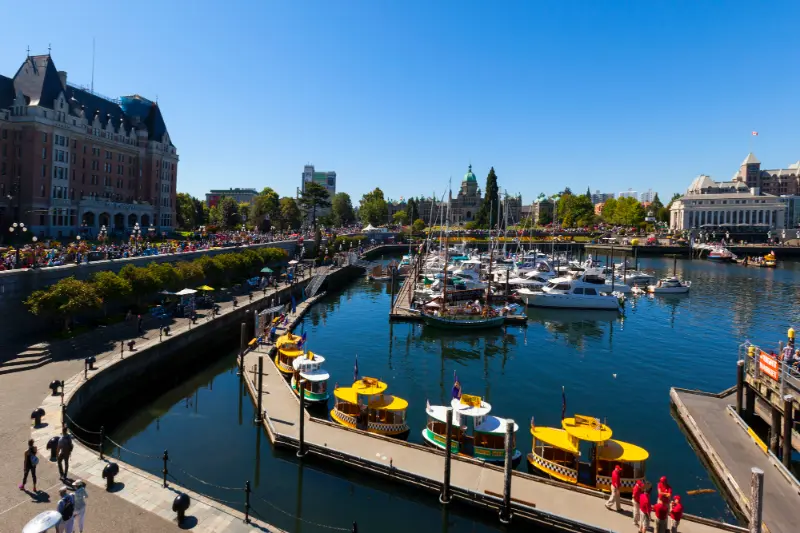
Do not interpret “central” as “must stay on the busiest street”. A hotel two or three blocks away from the main tourist strip can be quieter while preserving almost all of the convenience.
Best area for families
Families should prioritise predictable transport, easy food options and a room location that does not make every outing feel like a project. I would compare Inner Harbour, Downtown and the calmer parts of Fernwood. Check elevator access at the nearest station, whether the walk involves steep gradients, and how late you can easily find dinner near the hotel.
An apartment-style property can be useful for longer stays, but read the rules carefully: legal short-term-rental requirements, reception arrangements, luggage storage and cleaning policies vary. A conventional hotel can be better value once those practical services are included.
Best area for nightlife and restaurants
If evenings matter as much as daytime sightseeing, Fairfield deserves attention. Staying near the restaurants and bars you actually plan to use means you are not watching the clock for the last convenient connection home. The trade-off is noise. Read recent reviews for street noise, clubs, patios and weekend crowds rather than relying only on the hotel’s own “quiet room” wording.
For travellers who like dinner and a walk but not a late-night scene, Downtown often gives a better compromise.
Best area for a local atmosphere
James Bay is the sort of area I prefer on a second visit or a longer stay. You trade a little headline convenience for neighbourhood cafés, grocery stores, parks and the feeling that the city continues around you after the sightseeing day ends. This is often where a destination becomes more memorable.
The key is making sure the local atmosphere does not become a transport penalty. Check the real morning journey to your first activity and the late-evening journey back. If both are simple, the neighbourhood can be a stronger choice than a generic downtown room.
Where to stay without a car
You do not need to stay beside the main railway station simply because you are travelling without a car. What matters is access to a useful transit line. In Victoria BC, I would favour hotels connected to the Inner Harbour–Downtown walking core. One-seat rides are worth more than they look on a map, particularly in rain, snow or when travelling with luggage.
Before booking, use a transit planner at the actual times you expect to travel. A route that looks perfect at noon may run much less frequently late at night or on Sunday morning.
Where to stay if you have a car
A central hotel and a rental car are not automatically a good combination. Parking can add a substantial daily cost, entrances may be awkward, and the vehicle may sit unused while you explore on foot. If Victoria BC is only one stop on a larger British Columbia road trip, compare a central stay without a car against picking up the vehicle on departure day.
If you genuinely need the car throughout the stay, check overnight parking rates, height limits, in-and-out privileges and whether the property has charging if you are renting an EV. “Parking available” does not necessarily mean included.
How much should location influence your hotel budget?
I would rather pay a modest premium for a neighbourhood that removes two daily transit trips than save a small amount on a room far from everything. The cheaper hotel stops being cheap once you add fares, rideshares, lost time and the temptation to eat wherever is closest because returning to the centre feels inconvenient.
That does not mean booking the most expensive central property. Search a few blocks beyond the obvious landmark zone, compare refundable rates, and look at business-oriented hotels on weekends or leisure-heavy areas on quieter weekdays. Rates move far more than neighbourhood boundaries do.
Where I would avoid booking blindly
I would be cautious about any property marketed as “Victoria BC area” when it is actually well outside the practical sightseeing zone. Hotel search engines sometimes use broad destination labels. Always open the map before paying.
- Do not book only by distance. A river, railway, highway or steep hill can make one kilometre feel much farther.
- Do not assume every downtown block feels the same. Office districts can become very quiet at night; entertainment streets can do the opposite.
- Do not ignore construction. Major projects can affect noise, sidewalks and access for months.
- Do not rely on old neighbourhood reviews. Cities change quickly; sort guest reviews by newest first.
- Do not prepay a non-refundable room too early unless the saving is meaningful and your plans are fixed.
A simple neighbourhood decision for different travellers
- First trip, 2–3 nights: start with Inner Harbour or Downtown.
- Food-focused trip: compare Fairfield with James Bay.
- Family trip: prioritise quiet blocks, simple transit and supermarkets over nightlife.
- Solo traveller: value easy late-evening transport and a lively but comfortable street environment.
- Couple or weekend break: a walkable dining area can be worth more than a larger room farther out.
- Longer stay: James Bay or Fernwood may provide a better everyday rhythm.
- Road trip: consider staying centrally first and collecting the rental car only when leaving.
My booking checklist before I pay
- Open the hotel on a map and verify the exact block.
- Check the walk to the nearest useful transit stop, not just the nearest stop of any kind.
- Test the route to two must-see places at morning and evening times.
- Read the newest reviews for street noise, elevators, heating/air-conditioning and construction.
- Check taxes, resort/destination fees, parking and breakfast before comparing totals.
- Confirm luggage storage if your flight arrives early or leaves late.
- Prefer refundable conditions when prices are close.
Finding a hotel in Victoria BC
Once you have chosen the neighbourhood, compare properties rather than starting with a city-wide hotel list. You can compare accommodation in Victoria BC on Booking.com. Use the map view to keep the search inside the area you actually want, and always compare the final price rather than the first nightly figure shown.
If this is your first visit, read our Victoria BC travel guide before booking. It is much easier to choose the right base once you know what your days will contain.
Final recommendation
There is no single best neighbourhood in Victoria BC. For most first-time visitors, Inner Harbour is the safest place to begin comparing hotels because it keeps the classic itinerary simple. Travellers who care more about local life should also look seriously at James Bay, while Fairfield is a stronger fit when food and evenings are central to the trip.
The best booking is the one that supports your itinerary. Choose the area first, then the hotel. That order prevents one of the most common travel mistakes: saving a little on the room and spending the whole trip paying for the location.
Staying here on a solo trip
Travelling alone changes the value of location and late-evening transport. See our Victoria BC solo travel guide before choosing your base.
Practical planning before booking
Before choosing dates and accommodation, see our things to know before visiting Victoria BC guide for transport, weather, timing and common mistakes.
Couples and romantic stays
If this is an anniversary, honeymoon stop or weekend for two, read our romantic Victoria BC getaway guide before choosing your hotel.