
| Travel question | Best starting strategy |
|---|---|
| First visit | Stay central and use transit for the long jumps |
| Airport arrival | Use the dedicated airport connection or a direct ride if luggage makes transfers awkward |
| Regional road trip | Pick up the car when you leave the city, not automatically on arrival |
| Short stay | Group attractions by neighbourhood and avoid unnecessary cross-city trips |
| Winter trip | Minimise outdoor waits and check live service information |
Vancouver is one of the most rewarding Canadian cities to explore without a car. The Canada Line brings you from the airport towards downtown, SkyTrain reaches neighbourhoods farther out, buses fill the gaps and SeaBus crosses Burrard Inlet to the North Shore. Once you understand these connections, it becomes easy to combine a waterfront walk, a market and a viewpoint in one day rather than wasting time crossing the city repeatedly.
The detail that surprises visitors is how fare zones and airport charges work. Contactless payment is convenient, but the right fare still depends on the journey and time of day. I would plan the first day around where you are staying, then decide whether a rental car is needed for destinations beyond the urban transit network.
Vancouver fare details worth knowing in 2026
On the TransLink network, a bus trip counts as one zone regardless of how far it travels, while SkyTrain and SeaBus fares may cross zones at certain times. Contactless credit or debit cards, mobile wallets and Compass fare products are accepted; use the same card or device when transferring. Tap in and out on SkyTrain and SeaBus, but only tap in when boarding a bus. A normal transfer window is 90 minutes, subject to the fare rules.
If you arrive by air, remember the airport surcharge: as of 1 July 2026, TransLink lists a CAD 6.50 YVR AddFare on applicable journeys beginning at the airport. This is in addition to the normal fare and can affect your arrival budget. See TransLink’s official fare guidance before departure because fares can change again.
A low-stress first day without a rental car
After reaching your accommodation, explore a nearby part of the seawall or waterfront rather than immediately travelling to another corner of the city. On the next day, combine Stanley Park with Coal Harbour or a downtown attraction. Save North Vancouver for a separate excursion using SeaBus and onward transit. The goal is to group places geographically so you spend more time outside and less time searching for the next connection.
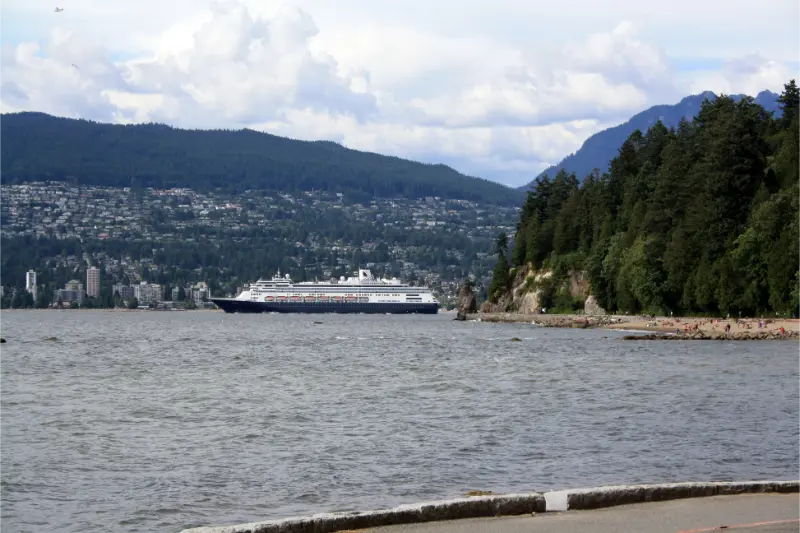
The transport system in Vancouver: what visitors actually need
Metro Vancouver transit is integrated under TransLink, combining SkyTrain, buses and SeaBus. The network is unusually useful for visitors because it links the airport, downtown, major neighbourhoods and North Shore connections without needing a car.
Canada Line is the key airport–downtown route; Expo and Millennium lines connect downtown with east Vancouver, Burnaby, New Westminster, Surrey, Coquitlam and other parts of the region. SeaBus is both practical transport and a scenic crossing to North Vancouver.
A first-time visitor does not need to memorise the entire network. Learn the one or two rapid or frequent corridors that connect your accommodation with your highest-priority areas, then use walking for the final part of the journey. That is usually faster than planning every day around a dozen route numbers.
How to pay for public transport
Compass Card and Compass Tickets work across the network, and contactless bank cards or mobile wallets can be used for adult fares. TransLink allows transfers on a single fare window; keep using the same card or device so the system recognises the journey.
Fare systems change more often than neighbourhood geography, so verify current prices and product rules on the TransLink official website shortly before travel. Do not rely on a fare amount copied from an old blog post, especially for day passes, airport supplements or discounted categories.
Single fares or day passes?
A day pass is useful only if you will genuinely make enough paid journeys. If your plan is a museum morning followed by several hours walking one neighbourhood, individual fares can be better. Conversely, a day built around several separated districts can justify unlimited travel. Count journeys, not attractions.
Keep one payment method consistent
Where contactless or smart-card transfers are supported, use the same physical card or the same device throughout the transfer window. A bank card and the same card loaded in a phone wallet can be treated as different payment credentials. This small detail prevents accidental double charging on many modern transit systems.
Walking: the transport mode visitors underestimate
Downtown, Coal Harbour, West End, Yaletown and the waterfront are highly walkable. Granville Island, Kitsilano and Mount Pleasant fit better into separate clusters rather than being stitched together with repeated cross-city journeys.
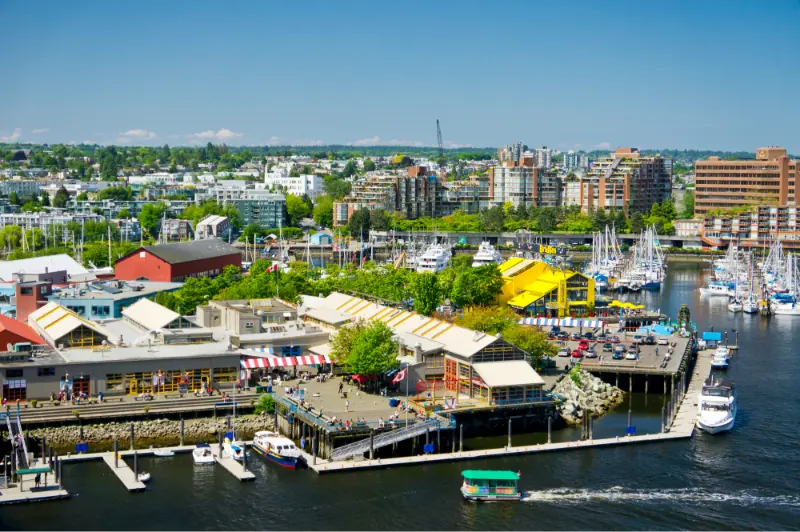
Walking is not simply a way to save money. It is how you notice the local scale of a Canadian city: the transition between commercial streets and residential blocks, the cafés that never appear on a top-ten list, the public art, parks and waterfront spaces. Use transit to remove the boring distance, not the interesting distance.
Airport to city: plan it before you land
YVR connects directly to the Canada Line. Travellers boarding at the airport should remember that TransLink applies an airport AddFare to certain pay-as-you-go journeys from airport stations, so check the current fare structure before travel.
Read our dedicated airport guide for terminal-specific details. The cheapest option is not always the best after a long-haul flight: three travellers with luggage may find a direct ride competitive, while a solo traveller arriving in the afternoon may save substantially with public transit.
Do you need a rental car in Vancouver?
For a city-only visit, a car is rarely necessary. Parking and downtown traffic can cost more time than they save. A car becomes useful for Sea-to-Sky trips, the Sunshine Coast, some trailheads and multi-day British Columbia road trips.
The smartest compromise on many Canadian trips is a split rental: stay car-free for the city portion, then collect the vehicle on the morning you leave. That avoids hotel parking, downtown navigation and paying for a car that spends two days stationary. It can also let you choose a neighbourhood for atmosphere rather than parking access.
When a taxi or rideshare is worth paying for
Public transport is not a religion. A taxi or rideshare can be the sensible choice for a 5 a.m. airport departure, a late arrival with children, heavy ski or hiking equipment, or a cross-town journey that requires multiple transfers. Use it strategically for the awkward leg instead of defaulting to it for every trip.
How to organise sightseeing around transport
Build each day around one geographic cluster. Start with the attraction that has a fixed reservation, add nearby streets or parks, then use transit once to reach the next district. Repeatedly returning to the hotel between attractions is one of the biggest hidden time costs on a short city trip.
For a ready-made structure, see our city itinerary and our broader Vancouver travel guide. Use those articles to decide what you actually want to see before buying a multi-day transit product.
Public transport with luggage
Peak-hour transit and large suitcases are a poor combination. If possible, avoid the main commuter period on arrival and departure days. Keep luggage close, do not block aisles or doors, and check whether your route has elevators if stairs are difficult. A route with one extra stop but an accessible transfer can be better than the technically fastest route.
Getting around with kids
With children, reduce the number of transfers before trying to reduce the fare. One direct bus that takes ten minutes longer can be easier than a train-to-bus transfer involving stairs, winter clothing and a stroller. Check the operator’s current child-fare rules because age thresholds and free-travel policies differ by city and can change.
Accessibility and step-free travel
Major Canadian transit systems provide accessibility information, but the real trip still depends on the individual station, stop, elevator and vehicle. If step-free travel is essential, check the operator’s live elevator or service alerts before leaving. Build a backup route for any station where one lift is critical to your journey.
Winter, rain and service disruptions
Rain is a normal part of Vancouver travel, so choose routes with indoor alternatives and covered transfers. Snow is less frequent in the city but can disrupt surface transport when it occurs, while mountain destinations may have very different conditions from downtown.
In bad weather, the best transport plan is often a more conservative one: fewer transfers, shorter waits and a hotel close to the first activity of the day. Save outdoor-heavy districts for the best forecast window and use museums or indoor markets when the conditions are worst.
Cycling, scooters and bike-share
Cycling can be excellent in some Canadian cities and less attractive in others because of distance, hills, weather or infrastructure. If a bike-share system exists, treat it as a short-trip tool rather than a full-day rental until you understand the local rules. Wear a helmet where required, use protected lanes when possible and never assume the fastest car route is the safest cycling route.
Night travel and the last connection
Before an evening event, check the last useful departure rather than only the outbound route. Some systems switch to lower frequencies late at night, and rail service may end before nightlife does. Save the official journey planner on your phone and know the approximate cost of a taxi back to your accommodation as a backup.
Five transport mistakes first-time visitors make
- Booking the cheapest outer hotel without pricing the commute. A lower room rate can disappear after repeated long trips.
- Renting a car on airport arrival by default. Central parking can turn convenience into stress.
- Buying an unlimited pass before counting rides. Many visitor days are mostly walking.
- Ignoring live service alerts. Construction, events and weather can change the best route.
- Crossing the city for one famous food stop. Choose good options near the area you are already exploring.
A practical car-free day plan
Choose accommodation within a short walk of either your main attraction cluster or a strong transit corridor. Keep the arrival day local. Put the most geographically distant urban area on its own day. Schedule any regional day trip after you understand the city. Pick up a rental car only when the itinerary truly leaves the urban network.
Where to stay to reduce transport time
Transport planning begins with accommodation. Compare areas in our Vancouver neighbourhood guide. You can also compare accommodation in Vancouver on Booking.com. Look at the walking route to the nearest useful stop, not simply the straight-line distance shown in a hotel listing.
How transport changes on a longer Canada trip
If this city is one stop in a larger itinerary, think about the transition day. Returning a car downtown, catching a train from a central station or flying onward all favour different hotel locations. A one-night stay near an airport may make sense before an early flight, while a rail journey can favour a final night near the central station.
Frequently asked questions
Can you visit Vancouver without a car?
Yes for the core visitor experience described in this guide. The value of a car rises mainly when you add regional nature, rural day trips or a multi-stop road trip.
Should I buy a transit pass before arrival?
Usually not unless the product has a clear online advantage. First map your hotel and itinerary, then choose the fare product that matches the number of trips you will actually take.
Is public transport safe for visitors?
Canadian urban transit is used daily by residents and visitors. Apply normal city awareness, keep valuables controlled, follow operator instructions and use official service information, especially late at night.
Is it better to use Google Maps or the official transit app?
General map apps are convenient for route comparison, but the operator’s own website or app is the better source for service alerts, fare rules and planned disruptions. Use both rather than relying on one source.
When should I use a taxi instead?
Use a direct ride when the transit alternative adds several transfers, when you are travelling with heavy luggage, when service is sparse late at night or when accessibility needs make the direct option substantially easier.
Useful official resource
Check TransLink shortly before travel for current fares, schedules, service alerts and accessibility information.
Final advice
The easiest way to get around Vancouver is to combine three tools rather than search for one perfect mode: walk the interesting parts, use public transport for the long jumps and pay for a direct ride only when it solves a real problem. Add a rental car when the trip becomes regional, not simply because you have arrived in Canada.
Disclosure: some links in this article are affiliate links. If you make a booking through them, Dreaming of Canada may earn a commission at no extra cost to you.