
Ottawa hidden gems are not about finding places that nobody has ever heard of. In a city visited by millions of people, that promise is usually marketing. A genuinely useful hidden gem is a place that adds a different layer to the trip: somewhere with local history, a quieter landscape, an unusual viewpoint or a neighbourhood rhythm that the standard first-time circuit does not show.
Ottawa is often reduced to Parliament, national museums and the canal, yet the capital is unusually good at small discoveries: waterfalls beside roads, experimental gardens, river lookouts and cultural spaces tucked into neighbourhoods. Because so many national landmarks are concentrated downtown, visitors can add a hidden-gem layer without sacrificing the essentials.

| Best for | second-time visitors, curious first-timers, photographers and travellers who enjoy local neighbourhoods |
|---|---|
| How much time | 1–2 days for a dedicated hidden-gems layer, or add 2–3 places to a normal city itinerary |
| Best approach | group places by neighbourhood instead of chasing isolated pins across the city |
| Important | check current access, opening hours and trail conditions for any place that matters to your exact date |
What I mean by a hidden gem
I use the term carefully. Some places below are well known to residents and may be busy on a sunny weekend. They are included because many short-stay visitors overlook them, not because they are secret. Others are small enough that they only make sense when paired with a nearby neighbourhood, park or walking route. That distinction matters: travelling farther just to prove you found an obscure place can create a worse trip than spending more time in one interesting district.
I also avoid trespassing, unofficial viewpoints and “secret” access routes that depend on ignoring signs. A good travel blog should not turn unsafe cliffs, residential gardens or closed industrial land into attractions. Every suggestion here is intended to be approached through normal public access, with current local rules taking priority.
10 hidden gems and unusual places in Ottawa
Summer Pavilion behind Parliament Hill
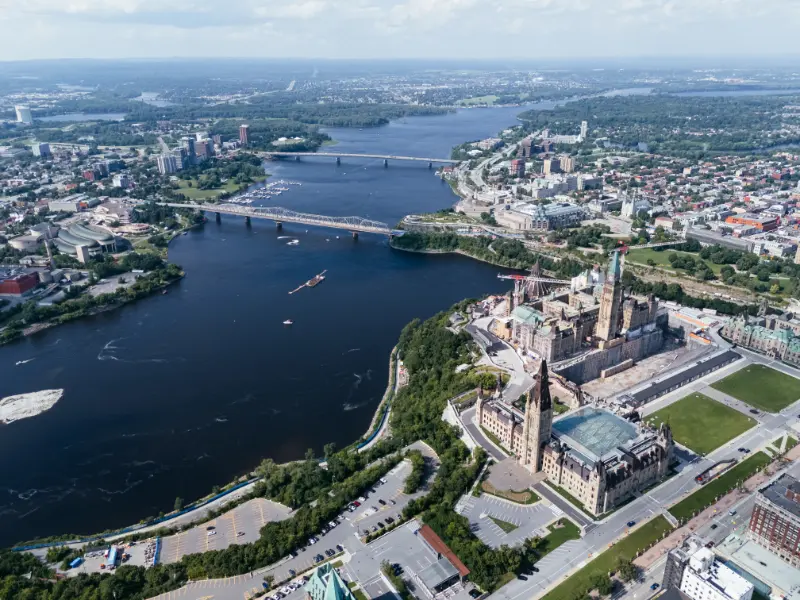
Walk behind the main parliamentary complex and the river side becomes much quieter. The Summer Pavilion is a reconstructed open-air gazebo positioned for broad views toward the Ottawa River and Gatineau. It is close to one of Canada’s busiest visitor sites yet feels surprisingly removed from the front lawn. Construction around Parliament can alter routes, so follow current pedestrian signs.
Rideau Falls and Green Island
Where the Rideau River drops toward the Ottawa River, two broad curtains of water create a landscape many short-stay visitors miss. Green Island adds monuments, mature trees and viewpoints between the falls. The area works well as a cycling stop between downtown and Rockcliffe, and spring runoff can make the water especially impressive.
Dominion Arboretum
Part of the Central Experimental Farm landscape, the arboretum feels less formal than a botanic garden and more like a collection of mature trees arranged across rolling ground beside the Rideau Canal. It is ideal for a long walk, autumn colour or a picnic. Because it is open landscape rather than a ticketed attraction, it also fits naturally into a budget itinerary.
Ornamental Gardens at the Central Experimental Farm
Close to the arboretum, the ornamental gardens show another side of the experimental farm complex. Beds, collections and seasonal displays make this a compact stop that changes throughout the growing season. Combine it with the arboretum instead of treating the gardens as a standalone cross-city trip.
Remic Rapids
Along the Ottawa River pathway, Remic Rapids is known in warmer months for temporary balanced-rock sculptures created from local stone. The art is seasonal and not guaranteed, but the river setting remains worthwhile even when no installation is present. It is an excellent cycling stop and a reminder to treat ephemeral attractions as a bonus rather than a promise.
Hog’s Back Falls
South of the central tourist zone, Hog’s Back creates a surprisingly rugged waterfall scene where the Rideau River and canal system diverge. Paths and viewpoints make it easy to combine with Mooney’s Bay. Water conditions vary, and slippery edges deserve caution; stay on established routes rather than approaching the flow for photos.
Maplelawn Garden
Maplelawn is a walled historic garden in the west end that feels almost secret from the street. The formal layout and heritage setting offer a sharp contrast to Ottawa’s monumental government landscapes. Opening conditions and volunteer gardening activity can vary, so check current information if the garden is a priority rather than a casual neighbourhood stop.
Rockcliffe Park Pavilion and lookout
Rockcliffe is one of Ottawa’s most elegant residential areas, and the pavilion/lookout gives the neighbourhood a public focal point above the river landscape. The visit is less about a single dramatic monument than the combination of wooded roads, heritage houses and views toward Gatineau. Cycling is one of the best ways to connect it with Rideau Falls.
Princess Louise Falls
In suburban Orléans, a small waterfall and wooded ravine sit unexpectedly close to residential streets. It is a genuine local curiosity, but it is far from downtown and conditions can be muddy. Include it only if you are already in the east end or have a car; hidden does not automatically mean worth a long detour.
Mādahòkì Farm
This Indigenous cultural destination on the city’s rural edge hosts experiences, seasonal events and a marketplace connected to Indigenous stories and contemporary culture. It should not be treated as a casual “secret attraction”; plan around the programming actually offered on your dates and engage with it as a cultural experience. Reservations or event-specific tickets may apply.
How to build these places into a real trip
The most common hidden-gem mistake is geographic greed. Search results encourage you to save ten pins because each looks interesting in isolation. On the ground, the city becomes a sequence of buses, parking searches and rushed photos. Instead, choose two or three places that reinforce one another. A garden plus a neighbourhood walk plus a nearby viewpoint usually creates a better half-day than four unrelated “secret” stops.

Use your main sightseeing days for the landmarks you genuinely care about, then place hidden gems into the gaps. Early morning is excellent for gardens and lookouts; late afternoon works well for residential neighbourhoods; sunset belongs to waterfronts and skyline viewpoints. Indoor or heritage sites should anchor bad-weather windows because their schedules are less flexible than a public park.
A practical 2-day hidden-gems itinerary
Day 1 — a coherent local route
From downtown, walk behind Parliament to the Summer Pavilion, continue toward Rideau Falls and then follow the river direction toward Rockcliffe. A bicycle makes this especially efficient and turns several small sights into one coherent route.
Day 2 — a different side of the city
Use the second day for the Central Experimental Farm: Ornamental Gardens, Dominion Arboretum and then Hog’s Back Falls farther south. This cluster is greener and less formal than the museum district, and it shows why Ottawa works so well for active city travel.
When these hidden gems work best
Spring brings strong water flow at the falls and blossoms in the gardens; summer offers the fullest outdoor programming; autumn transforms the arboretum and river corridors. Winter can still be beautiful but some garden value disappears and icy paths require more care.
Transport: hidden should not mean inconvenient
Before adding a place to your plan, check the full door-to-door journey rather than the straight-line distance. A location may be only a few kilometres away but require a slow transfer, a steep climb or a long walk from the nearest stop. Conversely, a place that looks far out may sit on a direct rapid-transit or cycling route. The best hidden gems are often the ones that fit naturally into where you are already going.
If you are driving, do not assume free or easy parking. Residential streets can have restrictions, popular parks can fill quickly and seasonal events can change access. If you are using public transport, save an offline map and the return stop before entering a ravine, shoreline trail or large park where mobile coverage and signage may be less obvious.
Costs: many are free, but not every experience is
Public parks, viewpoints and neighbourhood walks usually have no admission charge. Gardens, heritage interiors, guided cave visits, cultural programming and museums may have tickets, donations or restricted hours. I have deliberately separated the public landscape from optional paid components where possible. That lets you decide whether the extra experience adds enough value for your interests.
If you still need accommodation, you can compare hotels and apartments in Ottawa on Booking.com. Staying in a neighbourhood connected to the places you actually want to explore can save more time than choosing the lowest room price on the edge of the metro area.
The mistake I would avoid
Do not spend an hour on buses for a tiny suburban waterfall simply because it appears on a “secret Ottawa” list. Hidden gems should improve your route. Prioritize the river and farm clusters unless you have extra time or a specific interest.
How to travel respectfully in local places
Hidden-gem articles can unintentionally send visitor pressure into places that were never designed for it. In residential areas, keep voices low, avoid photographing people or homes at close range and never block entrances for a picture. On trails, stay on the established route even when a social-media photograph appears to have been taken from somewhere “better.” In cultural or Indigenous spaces, follow the interpretation and protocols provided by the people responsible for the site.
The goal is to come away with a more nuanced understanding of Ottawa, not to collect proof that you found somewhere other tourists did not. The more ordinary a place is to residents, the more important respectful behaviour becomes.
Official source to check before you go
For current destination information and updates, consult Ottawa Tourism – Hidden Gems to Photograph. Access, construction, seasonal programming and trail conditions can change, so verify any detail that could affect your day.
Related Dreaming of Canada guides
Frequently asked questions
Are these places really hidden?
Not all of them are secret, and that is intentional. A useful travel guide should favour places that are interesting, legal and realistic to visit over obscure locations that require trespassing or unsafe access. Think of them as underused additions to a first-time itinerary.
Can I visit all 10 in one day?
I would not recommend it. The list is designed as a menu, not a checklist. Pick a cluster of two to four places based on geography and your interests. You will remember a neighbourhood you actually explored far better than ten places seen through a car window.
Do I need a car for Ottawa hidden gems?
Usually not for every stop. Several can be reached by walking, cycling or public transport, while a few outer parks or regional viewpoints become easier by car. Build the route around your transport style instead of renting a vehicle solely to reach one small attraction.
Which hidden gems are best for photography?
Look for the places in this guide with water, skyline or elevated views, then plan them for early or late light. Gardens and architecture benefit from softer overcast conditions. Always prioritize safe public viewpoints over the exact angle you may have seen on social media.
What if I only have two or three days in Ottawa?
Keep the major sights that genuinely matter to you and add one hidden-gem half-day. That is enough to make the trip feel more personal without sacrificing the landmarks you travelled to see. The two sample routes above can also be shortened to a morning or afternoon.
My final advice
The most memorable hidden gems are rarely the ones with the most dramatic name. They are the places that change how you understand the city: an old industrial landscape reused as a park, a neighbourhood street where local life is visible, a small garden that rewards twenty quiet minutes, or a viewpoint that explains the geography at a glance. Choose fewer places, connect them logically and give yourself time to notice what is between the pins.
Opening hours, access, construction, seasonal programming and transport details can change. Verify important information before travel. Disclosure: some links in this article are affiliate links. If you make a booking through them, Dreaming of Canada may earn a commission at no extra cost to you.