
A road trip through Banff and Jasper is one of the journeys that makes people dream about Canada in the first place: glacier-fed lakes, huge valleys, wildlife, forest and a road that seems to turn every few minutes toward another mountain. It is also a trip that benefits from more planning than the photos suggest.
Accommodation sells quickly, shuttle rules matter at Lake Louise and Moraine Lake, weather can change in minutes, mobile coverage is incomplete on the Icefields Parkway, and Jasper continues to recover from the 2024 wildfire. Plan the framework carefully, then leave the days flexible enough for weather.
How many days for Banff and Jasper?
I would consider 7 nights a strong minimum for Banff + Lake Louise + the Icefields Parkway + Jasper. Five nights is possible but rushed. Ten days lets you hike, rest and adapt to weather.
| Days | Suggested focus |
|---|---|
| 1 | Calgary to Banff, easy evening |
| 2 | Banff town + nearby viewpoints/lakes |
| 3 | Hiking or scenic day around Banff |
| 4 | Lake Louise + Moraine Lake with planned transport |
| 5 | Icefields Parkway to Jasper |
| 6 | Jasper scenic day |
| 7 | Jasper hiking/lakes or weather buffer |
2026 Banff National Park fees
Regular Parks Canada fees resumed on September 8, 2026 after the summer Canada Strong Pass period. Parks Canada currently lists Banff daily admission at CAD 12.25 for adults, CAD 10.75 for seniors and CAD 24.50 for a family/group, while youth 17 and under enter free. A Discovery Pass can make sense for longer trips or multiple parks. Always verify current rates on the official Banff fees page.
Moraine Lake: private cars are not allowed
This is the planning detail every first-time visitor needs to know. Personal vehicles are not permitted on Moraine Lake Road. You need a Parks Canada shuttle, public transit or a licensed commercial operator.
For 2026, Parks Canada released 40% of shuttle seats when reservations opened in April and the remaining 60% on a rolling basis two days before departure. The system can change in future seasons, so use the official Parks Canada reservation information for your dates.
Lake Louise parking and shuttles
Paid parking operates seasonally at Lake Louise Lakeshore. For 2026, Parks Canada listed the main paid-parking/shuttle operational season from May 15 to October 12. The Park and Ride is designed to reduce congestion, and shuttle reservations can be the least stressful way to see both Lake Louise and Moraine Lake.
Day 1: Calgary to Banff
Calgary is the most common gateway. Do not rush straight from an overnight flight into a long hiking day. Pick up your car, drive west and use the first afternoon for Banff town, Bow Falls or another easy viewpoint.
Banff accommodation is expensive in peak season. Compare Banff hotels and also check Canmore if Banff prices are high.
Day 2: Banff and nearby scenery
Use a lower-pressure day to understand the area. Options include the Banff Gondola, Tunnel Mountain, Vermilion Lakes, Lake Minnewanka and scenic drives. Choose based on weather and how active you want to be.
Do not treat wildlife sightings as a reason to stop in unsafe places. Pull over only where permitted and keep the required distance from animals.
Day 3: hiking day
Choose a trail that fits your experience, weather, season and current conditions. Mountain trail difficulty is not only about distance; elevation gain, exposure, snow, wildlife and sudden weather matter. Check Parks Canada trail reports and carry water, layers and appropriate equipment.
Day 4: Lake Louise and Moraine Lake
This day should be booked around transport. Once you have a shuttle plan, decide whether you want lakeshore walks, canoeing, a tea-house hike or simply viewpoints. Trying to fit a major hike at both lakes into one day can be unrealistic.
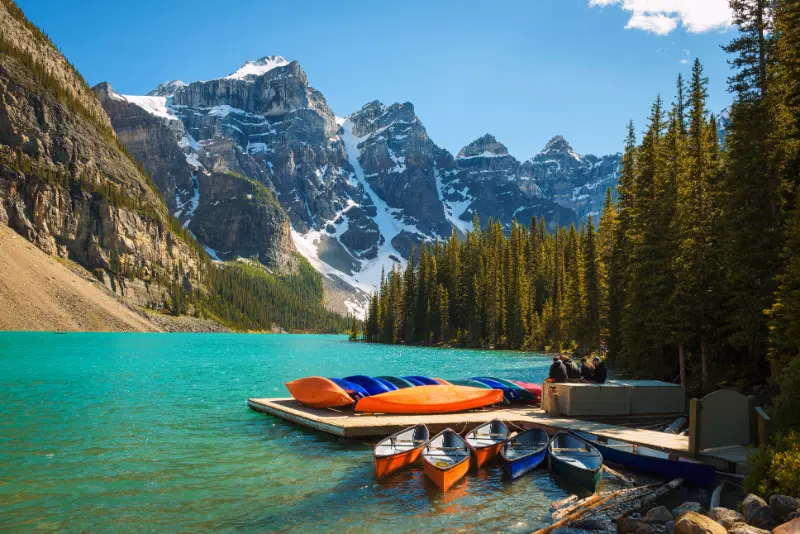
Moraine Lake’s water colour and the Valley of the Ten Peaks are iconic, but the experience is busiest in the middle of the day. Early or later shuttle times can feel different.
Day 5: Icefields Parkway
The Icefields Parkway between Lake Louise and Jasper is not a transfer to rush. Give it the whole day. Stops can include Bow Lake, Peyto Lake, Saskatchewan River Crossing area, glacier viewpoints, waterfalls and short trails.
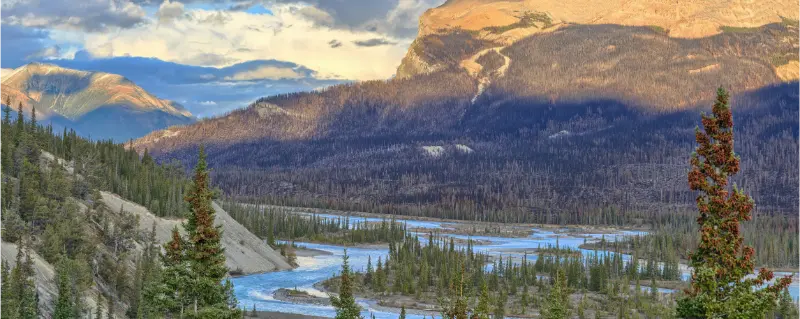
Start with a full tank. Services are limited, mobile coverage is incomplete and weather can change. Download offline maps. Carry food and water. Check road conditions before leaving.
Columbia Icefield area
The Columbia Icefield is one of the major stops. Commercial glacier experiences are available, but even travellers who do not book one can appreciate the scale from designated viewpoints and walks. Glaciers are dynamic and dangerous environments—stay on marked routes and obey barriers.
Arriving in Jasper
Jasper has a quieter, more spread-out feeling than Banff. The 2024 Jasper wildfire had a major impact on the community and park. Parks Canada continues to publish an interactive “what’s open” map and closure information. Some trails, campgrounds or areas may remain affected in 2026, so verify conditions instead of relying on an old itinerary.
Check current stays on Jasper accommodation.
Day 6: Jasper lakes and viewpoints
Depending on current access, possible areas include Maligne Lake, Medicine Lake, Pyramid Lake and Patricia Lake. Choose one major outing rather than spending the whole day driving between photo stops.
Day 7: hiking or buffer day
A buffer day is one of the smartest things you can add to a mountain trip. If weather was poor earlier, move a key hike here. If everything went perfectly, enjoy a slower day. Mountains rarely follow a spreadsheet.
Banff or Canmore?
Banff puts you inside the national park with excellent atmosphere and transit connections. Canmore can offer more accommodation choice and a local-town feel, but driving/transit time needs to be included. Compare total convenience, not only room rate.
Banff vs Jasper
Banff has more visitors, more tourism infrastructure and easier access from Calgary. Jasper often feels more spacious and less polished. You do not need to choose one on a proper Rockies road trip; the Icefields Parkway is what makes the two work together.

Best time for the road trip
July through early September gives the easiest access to classic summer hiking and lake scenery, but also peak demand. June can be beautiful with lingering snow at elevation. Late September brings cooler weather and early-snow risk. Winter is possible but requires a very different itinerary and serious winter-driving preparation.
See our Canada seasonal guide before choosing dates.
What to pack for the Rockies
- Layered clothing even in summer.
- Waterproof/windproof shell.
- Proper hiking shoes for your chosen trails.
- Sun protection and sunglasses.
- Reusable water bottle and snacks.
- Offline maps and charging cable/power bank.
- Bear spray if appropriate for your hiking plans, with knowledge of how to carry and use it legally and safely.
Wildlife safety
Elk, bears and other wildlife are not photo props. Stay back, never feed animals and follow Parks Canada distance requirements. In some areas, trail restrictions or group-size rules can apply because of wildlife activity.
Driving safety
Do not speed to reach a sunset viewpoint. Wildlife, cyclists, weather and sudden traffic stops are common. On the Icefields Parkway, give yourself daylight and avoid building a schedule that requires racing between stops.
Can you do Banff and Jasper without a car?
Banff and Lake Louise have useful transit and shuttle options, and organized tours can cover major sights. Jasper is more difficult to explore freely without a car. A car remains the most flexible way to connect the full route, but you will still use shuttles for places such as Moraine Lake.
Where the Rockies fit into a first Canada trip
For two weeks, combine Vancouver with Banff/Jasper, or fly west after an eastern city segment. Do not drive from Toronto simply to “get to” Banff unless a cross-country road trip is the main purpose of the holiday.
Use our two-week Canada itineraries and Vancouver travel guide to connect the route.
Final advice
Book the hard-to-get pieces early—accommodation, camping and necessary shuttles—then keep the daily plan flexible. The Rockies are at their best when you can change a hike because of weather, stop longer at an unexpected viewpoint and accept that one mountain day may not look like the picture you saved months earlier. That unpredictability is part of the experience.
How much does a Rockies road trip cost?
The Rockies can be one of the more expensive parts of a Canada holiday because accommodation, rental cars and fuel are difficult to avoid. Booking early gives you more choice, but do not choose a distant hotel purely for a lower nightly rate if it adds hours of driving every day. Groceries and picnic lunches can reduce food costs and are also practical on hiking days.
Accessibility and low-effort scenic stops
You do not need to be an advanced hiker to enjoy Banff and Jasper. Many lakes, viewpoints and short walks offer mountain scenery with limited elevation gain. Shuttle systems can also help around busy areas. Check current trail surfaces and accessible facilities before travelling because wildfire recovery, construction and seasonal conditions can alter routes.
Disclosure: some links in this article may be affiliate links. If you make a booking through them, Dreaming of Canada may earn a commission at no extra cost to you.