
Banff can be an outstanding family trip because the scenery does not require expert hiking. Lakes, gondolas, short trails, wildlife viewing from safe distances and the town itself give children a strong sense of the Rockies even if they are not ready for long mountain days. The mistake is assuming that famous places are effortless. Parking, shuttles, weather and altitude all need more planning with children than they do for adults travelling alone.
This guide focuses on Banff with kids from a parent’s planning perspective: how many days to allow, which areas make transport easier, what to do when the weather changes, and how to avoid turning a holiday into a sequence of queues. For the broader national picture, start with Canada with Kids: A Practical Family Travel Guide, then use this article to build the destination-specific part of your trip.
| Best for | Families who want a balanced mix of major attractions, outdoor time and flexible days |
|---|---|
| Suggested stay | 3–5 nights for most first family trips |
| Planning style | One anchor activity per day, plus one optional activity |
| Useful companion guide | Banff National Park Guide |
Is Banff with kids a good idea?
Banff & Lake Louise Tourism continues to publish dedicated family itineraries and kid-friendly activity guides, recommending a mix of lake visits, gondolas, easy walks and winter experiences. That reflects the best family strategy: choose one major landscape each day and stop before everyone is tired. You do not need to collect every lake to have a memorable Rockies holiday.
Family travel becomes easier when you stop measuring value by the number of attractions completed. Children need food, bathrooms, unstructured movement and sometimes an hour in a hotel pool more than they need the next famous sight. A good family itinerary therefore leaves visible gaps. Those gaps are not wasted time; they are what allows the planned activities to remain enjoyable.
The best family attractions and experiences
Lake Louise
One of the easiest ways for children to understand why the Rockies are famous. Arrive with a transport plan, then choose a shoreline walk rather than forcing a difficult hike.
Moraine Lake
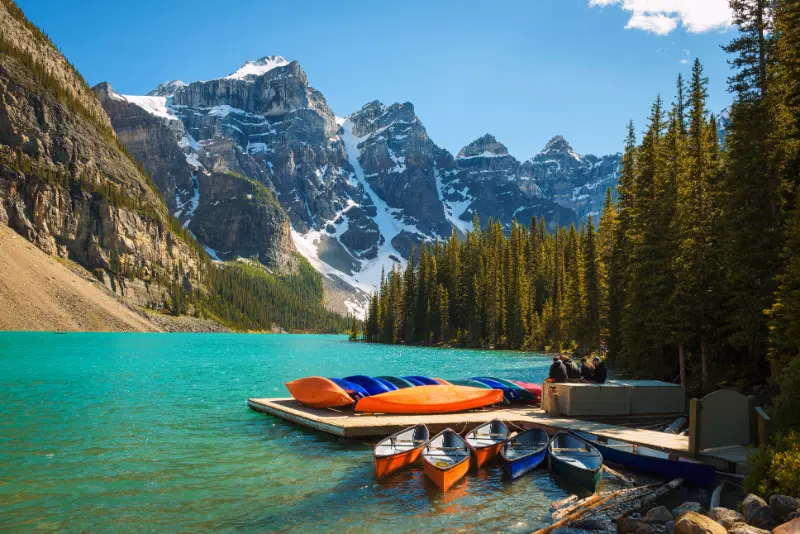
Private vehicles are not allowed on Moraine Lake Road; visitors use shuttles, transit or tours. For families, the booking and boarding logistics are as important as the sightseeing itself.
Banff Gondola
A straightforward way to reach high mountain views without a major climb. Weather changes quickly at elevation, so carry layers even when the town is warm.
Lake Minnewanka
Good for a scenic drive, picnic and short walks. Boat experiences can add variety for children who have already done several hiking days.
Johnston Canyon
Popular for a reason, but crowding changes the experience. Go early, choose a distance appropriate for the youngest walker and turn around before fatigue creates problems.
Banff town and playground time
The town is not merely a place to sleep. Parks, cafés and short riverside walks are useful recovery time between bigger mountain experiences.
For current openings, seasonal events and family listings, check the official tourism resource: official family travel information for Banff with kids. Hours, reservations and temporary closures can change after an article is published, so official sources should have the final word for the exact day of your visit.
Where to stay with children
Banff town is easiest for first-time families because food, transit and services are close. Canmore can offer more apartment-style accommodation but sits outside the national park and adds travel time. Lake Louise is quieter and scenic, yet dining and room choices are more limited and often expensive.
When comparing hotels, look beyond the nightly rate. A cheaper property can become more expensive after parking, breakfast, transit and repeated taxi rides. Family rooms, connecting rooms, kitchenettes, laundry facilities and a pool can materially change the trip. If your children still nap, being able to return to the room quickly is often worth paying for.
Check family-friendly accommodation in Banff, Alberta, Canada on Booking.com
A realistic family itinerary
- Day 1: arrive, explore Banff town, Bow River paths and an easy viewpoint; make the first day intentionally light.
- Day 2: visit Lake Louise using your planned transport, then add only a short family walk or picnic.
- Day 3: use a reserved shuttle or transit plan for Moraine Lake and keep the rest of the day flexible.
- Day 4: choose Johnston Canyon plus Lake Minnewanka, or a gondola day if the children need less walking.
- Day 5: pick one family adventure—easy cycling, a guided wildlife experience, rafting appropriate to age, or another short trail—rather than revisiting the full checklist.
Use this itinerary as a framework, not a promise. If a child becomes fascinated by one place, staying longer is often the right decision. If weather ruins a planned outdoor activity, move an indoor activity forward rather than trying to preserve the original order. The best family trips feel intentional without feeling rigid.
How to get around as a family
Before choosing a rental car, compare what you will actually use it for. In compact city centres, parking can create more work than transit. In national parks, islands and spread-out destinations, a car or reserved shuttle may be the simplest option. If you travel with a stroller, remember that a route described as “walkable” can still include hills, cobbles, stairs or crowded platforms.
Keep one small day bag permanently prepared with water, snacks, wipes, a power bank, basic medication you normally carry, a spare layer and a lightweight rain shell. In Canada, even summer days can change quickly near mountains, oceans and large lakes. The goal is not to pack for an expedition; it is to prevent a thirty-minute weather change from ending the day.
Best time to visit with kids
Summer offers the widest range of roads, trails and lake access, but reservations and crowds require planning. September can be excellent with cooler weather. Winter works for skiing, tubing and snowy scenery; families should treat cold-weather clothing and road conditions as essential planning rather than optional extras.
School holidays usually create the strongest demand for family-sized rooms and popular attractions, so reserve the hardest-to-replace pieces first. Shoulder season can reduce prices and crowds, but families should verify seasonal transport, amusement parks, boat tours and visitor centres rather than assuming summer schedules continue into May, September or October.
What to do when it rains
Mountain weather changes quickly. A wet forecast is a reason to shorten hikes, use town museums or cafés and move the gondola only if visibility justifies it. Do not assume a cloudy morning means the entire day is lost.
A useful rule is to keep one strong indoor attraction in reserve. If you book every indoor activity on sunny days, you have nowhere satisfying to move when the forecast changes. Conversely, do not spend a perfect outdoor morning indoors simply because a ticket was purchased weeks earlier unless the booking cannot be changed.
Eating with children without losing half the day
Banff has enough casual restaurants for families, but peak dinner times can involve waits. Book one meal you care about and keep the others flexible. Carry snacks and water in the car because children often become hungry exactly when the next stop has no services.
For breakfast, speed matters. A room with breakfast or a nearby bakery can protect the best morning sightseeing hours. Carry one familiar snack even when you want the children to try local food; curiosity works better when nobody is desperately hungry. For dinner, eating earlier than the local peak can reduce waits and make it easier to find tables for a family.
Budget planning for a family
Family travel costs rise quickly because accommodation, attraction tickets and restaurant meals multiply across several people. Balance expensive attractions with free parks, beaches, waterfronts and neighbourhood walks. A day with one paid attraction and several free experiences often feels more relaxed than a day built around three admission tickets.
For a wider framework on accommodation, transport and food costs, use How Much Does a Trip to Canada Cost? and Money in Canada. Prices change frequently, so treat published ticket amounts as temporary and verify the official booking page before promising a child a specific activity.
Travelling with toddlers, school-age children and teenagers
With toddlers: prioritise short transfers, parks, aquariums, animals and accommodation where you can return easily for a rest. A compact stroller may be useful, but a carrier can be better on stairs, cobbles or short nature trails.
With school-age children: interactive museums, boat rides, wildlife, easy hikes and transport experiences often create the best balance. Give children one small planning choice each day—where to eat, which museum section to visit, or which of two activities to choose.
With teenagers: build in independence and interests that feel genuinely theirs. Food districts, cycling, music, viewpoints, photography, sport and active adventures can work better than a schedule dominated by conventional sightseeing. Avoid treating a teenager as an older version of a six-year-old.
Safety and practical comfort
Canada is generally straightforward for family travel, but the environment deserves respect. Near wildlife, keep the official minimum distance and never use children as a reason to approach for a photo. Around water, treat cold lakes, ocean currents and waterfalls as hazards even when the viewpoint looks developed. In mountains, turn around when weather, fatigue or trail conditions stop being comfortable.
Save emergency numbers, accommodation addresses and transport confirmations offline. Teach older children what to do if separated in a crowded attraction. In urban areas, use the same ordinary precautions you would use at home: keep valuables controlled, supervise young children near traffic and transit platforms, and choose well-lit routes at night.
Good day trips and how far to stretch the itinerary
Yoho, Kootenay and the Icefields Parkway are tempting extensions. With children, choose one as the next base or a dedicated day rather than driving long distances after a full Banff activity schedule.
The most common family itinerary mistake in Canada is underestimating distance. A two-hour drive each way is not a small addition after a full sightseeing day. If an excursion is one of the main reasons for the trip, consider moving accommodation or adding a night instead of commuting from the same base repeatedly.
How this fits into a bigger Canada trip
Combine this guide with Banff National Park Guide, Best Time to Visit Canada and How to Get Around Canada. Families planning a road trip should also read Driving in Canada before deciding how much ground to cover.
Final family tips
Choose accommodation for convenience, protect the first and last travel days from over-planning, and never be afraid to repeat a good experience. Children may remember feeding ducks in a park, a ferry ride or a hotel pool more vividly than the attraction that ranked first on every list. That is not a planning failure; it is the point of travelling together.
A strong family trip has enough structure that adults are not constantly solving logistics and enough flexibility that children are allowed to be children. Plan the essentials, reserve what genuinely sells out, and leave room for the small moments that become the family story later.
Some links on this page are affiliate links. If you make a booking through them, Dreaming of Canada may earn a commission at no extra cost to you.