
free things to do in Vancouver are not just filler for travellers who cannot afford the “real” attractions. Vancouver is one of the easiest Canadian cities to enjoy outdoors without paying admission. Ocean, forest, beaches and public waterfront paths are part of the city rather than separate attractions. Costs rise when you add mountain gondolas, rentals and restaurant stops, so a good budget plan uses the landscape first and treats paid viewpoints as optional upgrades.
This guide focuses on experiences that can genuinely be enjoyed without an admission ticket. I also point out the hidden costs that make some supposedly free activities less free in practice: ferries, parking, equipment rental, food, timed transport and optional upgrades.
| Best for | travellers who want to control daily spending without sacrificing local experiences |
|---|---|
| Ideal time | 2 days for a dedicated free/low-cost city plan |
| Main hidden cost | transport between free places |
| Best strategy | group free activities by neighbourhood and pay only for the experiences you truly value |
Are these activities really free?
In this article, “free” means there is no normal admission charge to enjoy the core experience. It does not mean your entire day costs zero. You may still pay for public transport, parking, coffee, food, lockers, rentals or a ferry. This distinction matters because a remote free park reached by an expensive taxi can cost more than a modest museum ticket beside your hotel.
Seasonal events are even more complicated. A festival may have free public stages but paid concerts. A park may be free while a conservatory, zoo or pool inside it has admission. I separate the permanent free experience from optional extras so you can build a realistic budget.
Best free things to do in Vancouver
Stanley Park
The park itself is free and gives you forest trails, Lost Lagoon, viewpoints and access to beaches. The aquarium, pool, rentals and some facilities cost extra, so you can easily spend half a day here without buying an attraction ticket.
The Stanley Park Seawall
Destination Vancouver describes the park seawall as a scenic route for walking, jogging and cycling. Walking is free; a bike rental is not. Keep pedestrian and cycling lanes separate and allow more time than the map suggests if you stop for views.
English Bay, Second Beach and Third Beach
Public beaches are a major part of Vancouver life. Swimming conditions and seasonal lifeguard coverage vary, while pools and equipment rentals can have separate fees.
Granville Island
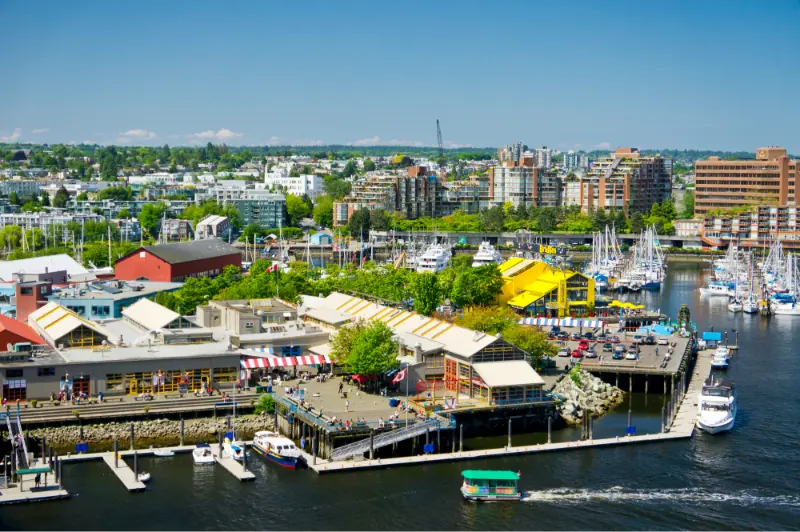
There is no admission charge to wander the market district, watch boats and browse studios. It stops being a free outing as soon as you start shopping or eating, so set a food budget before arriving if you want to keep the day inexpensive.
Gastown and the waterfront
The historic street grid, public spaces and harbour views can be explored on foot. The Steam Clock is a streetside landmark rather than a ticketed attraction, but the neighbourhood is busy and deserves normal big-city awareness.
Queen Elizabeth Park
The landscaped park and viewpoints are free to enter, while the Bloedel Conservatory has admission. This distinction matters because many “free Vancouver” lists casually mix the two.
False Creek and Olympic Village
The waterfront paths around False Creek offer skyline views, bridges, public art and neighbourhood life without an admission fee. Water taxis are convenient but paid, so walking can be part of the budget strategy.

Commercial Drive and neighbourhood walks
A neighbourhood walk costs nothing and shows a different Vancouver from the downtown waterfront. Commercial Drive, Kitsilano and Mount Pleasant work well for architecture, street life and window-shopping, with cafés treated as optional stops.
A practical 2-day free itinerary in Vancouver
Day 1 — central sights and the public city
Begin early in Stanley Park and walk a manageable section of the Seawall rather than racing around the entire perimeter. Continue through Coal Harbour and downtown to Gastown, then end around Canada Place for harbour views. This makes a strong first day with almost no admission spending.
Day 2 — parks, neighbourhoods and local atmosphere
Take transit to Granville Island, browse without turning the market into a shopping trip, then walk the False Creek waterfront toward Olympic Village. Finish at Queen Elizabeth Park or a beach for sunset, depending on weather and daylight.
The biggest “free attraction” trap to avoid
The Grouse Grind is sometimes marketed as a free hike, but descending Grouse Mountain generally involves a paid download option rather than simply walking back down the same route. Do not count it as a zero-cost attraction unless you have checked the current descent rules and budgeted accordingly.
How to make a free day actually inexpensive
Start with geography. Put three or four free places in the same district and walk between them. A plan that requires four separate transit rides, an Uber at sunset and paid parking is not really a budget day. The route should be compact enough that the streets, riverfront or neighbourhood between the named stops becomes part of the experience.
Bring a refillable water bottle where tap-water access is practical, and carry one snack rather than assuming every scenic stop needs a café purchase. If you want one restaurant meal, choose it deliberately and let the rest of the day remain simple. This is more enjoyable than trying to “win” travel by spending absolutely nothing.
Free does not mean low-value
Some of the experiences that explain a Canadian city best are public by design: parks, river paths, markets, civic architecture, harbour walks and neighbourhood streets. A paid observation deck may show you the skyline, but a free waterfront walk can show you how residents use the city. A museum can provide deep context, yet a historic district rewards anyone willing to slow down and read the landscape.
I would therefore use free attractions as the structure of the itinerary and add one or two paid experiences that cannot be replicated outside a ticketed venue. This usually produces a better trip than either extreme: paying for everything or refusing every admission fee.
Best seasons for free sightseeing
Late spring through early autumn usually gives you the widest choice of long walks, beaches, gardens, festivals and outdoor public spaces. Summer also brings crowds, heat and higher hotel rates. Shoulder season can be excellent because the city is still walkable while accommodation may be less pressured.
Winter changes the calculation. Public spaces remain free, but cold, snow, ice and shorter daylight can make a long outdoor itinerary unrealistic. Build in free indoor options such as libraries, conservatories or public buildings where available, and accept that one paid indoor attraction may be worth the cost on a severe-weather day.
What about free festivals and events?
Free festival programming can be excellent, but it changes by date and year. Treat it as a bonus layer rather than evergreen information. Before travel, check the official destination calendar for your exact dates, then verify whether “free admission” applies to the whole event or only to the outdoor grounds and selected stages.
Holiday weekends can create both opportunities and complications. You may find free concerts, ceremonies and street programming, but hotels can be more expensive and public transport may run on a special timetable. Saving $20 on admission is not useful if the same weekend adds $100 to the room rate.
Getting around without destroying the budget
Walk whenever distances and conditions are reasonable, then use public transport strategically rather than automatically. A day pass can make sense when you have several rides; pay-as-you-go can be cheaper when most of the itinerary is walkable. Compare the current fare structure before buying a pass just because it sounds convenient.
For city-specific transport advice, read How to Get Around Vancouver. That guide helps you decide whether a rental car, transit pass or central hotel is the better financial choice.
Where to stay for a low-cost city break
The cheapest room is not always the cheapest base. A hotel $35 less per night can become more expensive if you pay for two people to travel into the centre four times a day. Compare accommodation by total trip cost: room, parking, transport and the time you lose commuting.
Use our Vancouver Neighbourhoods Guide to understand the main areas. You can also compare current rates on Booking.com for Vancouver. I would filter by location and cancellation policy before chasing the lowest headline price.
How much can you save?
The biggest saving comes from replacing multiple major admission tickets, not from skipping coffee. If a couple chooses two free days built around parks, neighbourhoods and public spaces, then pays for one signature museum or tour, the attraction budget can be dramatically lower than a checklist itinerary with three ticketed stops per day.
Do not forget opportunity cost. A “free” activity that consumes two hours of transport may not be good value on a short visit. Your time matters, especially if this is your first trip and you have only two or three days in the city.
Official source to check before you go
For current events, closures and destination information, consult Destination Vancouver – 25 Best Free Things to Do. Free-admission policies, seasonal opening hours and public programming can change, so verify the details that matter to your exact date.
Related Dreaming of Canada guides
- Vancouver Travel Guide
- How to Get Around Vancouver
- Vancouver Neighbourhoods Guide
- How Much Does a Trip to Canada Cost?
Frequently asked questions
Can I visit Vancouver without paying for attractions?
Yes. You can build at least one substantial day—and usually two—around public spaces, parks, neighbourhoods and free cultural experiences. Most travellers will still want to pay for food, transport and perhaps one signature attraction.
Are free attractions open every day?
No. Outdoor public spaces are usually the most flexible, while gardens, galleries, conservatories, public buildings and seasonal facilities can have limited hours or closures. Check the official source shortly before travel.
Do I need a car?
Not necessarily. A central stay often makes walking and public transport more economical than parking. The answer changes for large parks and suburban sights, so decide after plotting the specific free places you want to visit.
Are free walking tours really free?
Some tours advertise no upfront ticket price but operate on a tip-based model. That is different from a genuinely free self-guided walk. Budget for a fair tip if you join a guide who works on that basis.
What should I spend money on instead?
Choose experiences that cannot be reproduced by walking through the city: a major museum you care about, a special wildlife trip, a performance, a food experience or a viewpoint that genuinely adds something. Spend selectively rather than automatically.
My final advice
A good budget trip to Vancouver should never feel like a list of things you were not willing to pay for. Use the city’s free spaces to understand how it looks, moves and lives, then direct your money toward the one or two experiences that matter most to you. That combination usually creates a richer trip and a more sustainable budget.
Free-admission rules, events, opening hours and transport fares can change. Verify important details before travel. Disclosure: some links in this article may be affiliate links. If you make a booking through them, Dreaming of Canada may earn a commission at no extra cost to you.