
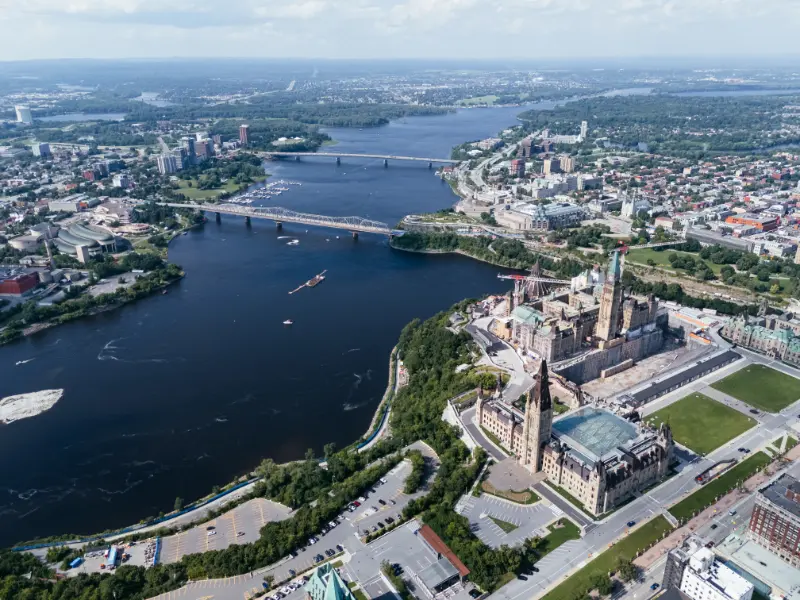
How Many Days in Ottawa? The Ideal Length for Canada’s Capital If you are trying to decide how many days in Ottawa, my practical recommendation is 2 to 3 days for most first-time visitors. Ottawa is compact enough for a rewarding weekend, but three days is better if you want more than Parliament Hill and the central museums. A single day gives you a strong overview; two days covers the classic capital experience; three days allows one major museum, neighbourhood time and a more relaxed excursion toward Gatineau or the Rideau Canal.
Ottawa Tourism currently publishes itineraries for different seasons, interests and lengths of stay, which fits the city well: the core is easy to understand quickly, but the museums, waterways and cross-river attractions reward an extra day. Four or five days makes sense when festivals, winter activities, cycling or several national museums are priorities.
Quick answer: how many days do you really need?
For a first trip, 2 to 3 days gives the best balance between seeing the essentials and leaving enough room for meals, weather, transport and spontaneous stops. The fastest possible itinerary is rarely the most useful one, especially when a city contains large museums or when a mountain/coastal destination depends on conditions.
| Trip length | What it can realistically include | My view |
|---|---|---|
| 1 day | Parliament Hill area, the Rideau Canal, ByWard Market and one national museum | Keep the day central and choose one major museum rather than trying to rush through several institutions. |
| 2 days | Day 1 central Ottawa; Day 2 a second museum, Canadian history or art, plus neighbourhood time and a riverside walk | Two days is the shortest stay I recommend for a leisure trip because the city finally feels like more than a government-and-monuments stop. |
| 3 days | Add Gatineau, cycling, another national museum, seasonal skating or a more relaxed food-and-neighbourhood day | Three days is my preferred first visit because weather or a long museum visit no longer ruins the whole schedule. |
| 4 days | Add deeper museum time, a festival programme, Gatineau Park or a slower canal and neighbourhood day | Four days is especially useful for families and travellers visiting during a major event. |
| 5+ days | Use the extra time for nature, regional day trips or several specialist museums without stacking them back to back | At this point Ottawa becomes a regional base rather than only a city break. |
How I calculate the right trip length
I start by separating full sightseeing days from nights. A four-night trip may provide only three complete days once arrival, hotel check-in and departure are included. Then I identify the three experiences I would most regret missing and give each enough time instead of filling the schedule with every attraction on a list.
I also group places geographically. Crossing a city repeatedly, driving back and forth along the same highway or moving accommodation every night can consume more time than an extra museum or viewpoint is worth. The goal is not to fit the maximum number of pins into a map; it is to create days that still work when lunch takes longer, traffic builds or the weather changes.
If you have 1 day
A realistic plan: Parliament Hill area, the Rideau Canal, ByWard Market and one national museum.

Keep the day central and choose one major museum rather than trying to rush through several institutions.
Build this version around one or two anchor experiences per day. If a museum, boat tour, lift, park shuttle, performance or sporting event has a fixed time, schedule flexible walking, neighbourhoods and meals around it. That approach protects the itinerary from the small delays that are normal during travel.
If you have 2 days
A realistic plan: Day 1 central Ottawa; Day 2 a second museum, Canadian history or art, plus neighbourhood time and a riverside walk.
Two days is the shortest stay I recommend for a leisure trip because the city finally feels like more than a government-and-monuments stop.
Build this version around one or two anchor experiences per day. If a museum, boat tour, lift, park shuttle, performance or sporting event has a fixed time, schedule flexible walking, neighbourhoods and meals around it. That approach protects the itinerary from the small delays that are normal during travel.
If you have 3 days
A realistic plan: Add Gatineau, cycling, another national museum, seasonal skating or a more relaxed food-and-neighbourhood day.
Three days is my preferred first visit because weather or a long museum visit no longer ruins the whole schedule.
Build this version around one or two anchor experiences per day. If a museum, boat tour, lift, park shuttle, performance or sporting event has a fixed time, schedule flexible walking, neighbourhoods and meals around it. That approach protects the itinerary from the small delays that are normal during travel.
If you have 4 days
A realistic plan: Add deeper museum time, a festival programme, Gatineau Park or a slower canal and neighbourhood day.
Four days is especially useful for families and travellers visiting during a major event.
Build this version around one or two anchor experiences per day. If a museum, boat tour, lift, park shuttle, performance or sporting event has a fixed time, schedule flexible walking, neighbourhoods and meals around it. That approach protects the itinerary from the small delays that are normal during travel.
If you have 5+ days
A realistic plan: Use the extra time for nature, regional day trips or several specialist museums without stacking them back to back.
At this point Ottawa becomes a regional base rather than only a city break.
Build this version around one or two anchor experiences per day. If a museum, boat tour, lift, park shuttle, performance or sporting event has a fixed time, schedule flexible walking, neighbourhoods and meals around it. That approach protects the itinerary from the small delays that are normal during travel.
How the season changes the answer
Summer and early autumn make it easy to fill three or four days with walking, cycling, patios and events. Winter can also justify three days because skating and seasonal activities take time and cold weather slows the pace. Spring is especially attractive around tulip season, when an extra outdoor half-day is worthwhile.
Long daylight does not always mean you should plan more. Summer crowds can add queues and parking time, while winter weather can slow walking or driving. I prefer to keep the recommended number of days roughly stable and change the daily pace instead of forcing a summer schedule into another season.
Do arrival and departure days count?
Ottawa’s airport and train station are reasonably close to the centre, but a late arrival still should not be counted as a full sightseeing day. If you have only two nights, choose an early arrival or a central hotel to protect your limited time.
An arrival before late morning can be a useful partial day. An afternoon arrival is usually an orientation day, and an evening arrival is a travel day. Likewise, if you need to leave for the airport, ferry or highway before lunch, do not count departure day as a normal sightseeing day.
Where you stay changes how many days feel necessary
Downtown, ByWard Market and Centretown are the most efficient short-stay bases. With three or four days, neighbourhoods farther from Parliament become more attractive because you have time to use public transport rather than optimising every minute around the core.
On short trips, location matters more than room size. A central hotel can effectively create extra sightseeing time by eliminating repeated transfers. On longer stays, a quieter neighbourhood, apartment or split base can be more valuable because you are no longer optimising every hour around the same central attractions.
Do you need a car?
A car is unnecessary for most central Ottawa itineraries. Walking, buses, light rail where useful and cycling cover much of a first visit. A car becomes more valuable for Gatineau Park or wider regional outings.
I decide on a rental car only after sketching the itinerary. In cities, a car can add parking cost and slow you down; in national parks, islands and rural destinations it can be the key to an efficient trip. If you need a car only for one excursion, compare a one-day rental or organised tour with keeping a vehicle for the entire stay.
Families, couples and slower travellers
Families should lean toward three days because Ottawa’s museums can easily occupy half a day each. Couples can enjoy a compact two-day weekend. Museum lovers, cyclists and festival visitors can justify four days without difficulty.
If you prefer slow breakfasts, long restaurant meals, photography or frequent breaks, add roughly one day to the fastest itinerary. Families should also plan around children’s energy rather than adult walking speed. A successful trip does not require using every hour just because the destination offers enough attractions to fill it.
When an extra day is genuinely worth it
Add a day when it creates a different kind of experience: a regional day trip, a substantial hike, a wildlife excursion, a major event, a second neighbourhood cluster or a weather buffer. An extra day is also valuable after a long flight or difficult drive because it protects the trip from a late arrival.
I would not add a day simply because another hotel night is discounted. If your priorities are already covered, moving to the next destination can make the overall Canada itinerary stronger. This is especially true on road trips, where staying too long in one gateway city can reduce the time available in the national park, island or coastal region you travelled to reach.
A simple planning formula
- List your three non-negotiable experiences.
- Mark anything that needs a reservation or has limited operating hours.
- Group attractions by neighbourhood or geographic area.
- Limit each full day to two major commitments.
- Add one flexible half-day when weather or transport matters.
- Choose the hotel only after the daily geography makes sense.
This method produces a duration that matches your trip rather than somebody else’s pace. It also reveals when you need another night and when you simply need to remove one low-priority attraction.
Useful Dreaming of Canada guides
- Ottawa Travel Guide
- 3 Days in Ottawa Itinerary
- Ottawa Neighbourhoods: Where to Stay
- How to Get Around Ottawa
- Ottawa Tourism: Official Itineraries
Final recommendation
For a first visit, I would plan 2 to 3 days. Ottawa is compact enough for a rewarding weekend, but three days is better if you want more than Parliament Hill and the central museums. A single day gives you a strong overview; two days covers the classic capital experience; three days allows one major museum, neighbourhood time and a more relaxed excursion toward Gatineau or the Rideau Canal.

If you have less time, reduce the number of areas rather than trying to move faster. If you have more time, use the extra day for a different experience or slower pace rather than adding attractions mechanically. That is usually the difference between a trip that looks impressive on paper and one that actually feels enjoyable.