
Where you stay in Toronto changes the trip more than many first-time visitors expect. The city is large, but you do not need to understand every district before booking. You simply need to decide what kind of stay you want: maximum convenience around downtown sights, restaurants and nightlife, a polished base near museums and shopping, or a more local neighbourhood with cafés, markets and evening atmosphere. Toronto’s transit makes many combinations workable, yet choosing the right area can still save a surprising amount of time.
In this guide: the best Toronto neighbourhoods for first-time visitors, couples, families, nightlife, food and sightseeing, plus transport logic, hotel-location mistakes and a simple method for choosing your base.
| Best for first visit | Downtown / Entertainment District |
|---|---|
| Best for restaurants and nightlife | King West / Queen West |
| Best for museums and upscale stay | Yorkville |
| Best for markets and character | Kensington Market / Chinatown area |
| Best for waterfront access | Harbourfront |
| Car needed | No for most city stays |
Start with one rule: stay near the experiences you will actually use
If this is your first Toronto trip, read the broader Toronto travel guide first and mark the places you genuinely want to visit. Then choose accommodation around the densest cluster rather than the cheapest hotel on the edge of the city.
A lower room rate can become poor value if you spend an hour each morning and evening commuting. Toronto transit helps, but vacation time has value too. For a three-night stay, location often matters more than an extra level of hotel luxury.
Downtown and the Entertainment District
This is the simplest first-time choice if your priorities include the CN Tower, major sports venues, theatres and a central urban base. You can walk to many headline sights and reach other neighbourhoods by subway or streetcar.
Expect a busy, modern atmosphere rather than a quiet residential feel. Compare options on Booking.com Downtown Toronto. If you are staying only two or three nights, paying more here can be justified by convenience.
Harbourfront and the waterfront
The waterfront works well if you like open space, lake views and easy access to ferries or harbour activities. It still feels central but can offer a different rhythm from the dense office and entertainment streets slightly inland.
Check the exact walking route to transit before booking. A property that looks close to the water may be less convenient for subway access, and construction can affect pedestrian routes. For summer trips, the ability to end the day by the lake is a real advantage.

Yorkville and Bloor-Yorkville
Yorkville is polished, central and convenient for high-end shopping, restaurants and several cultural attractions. It suits travellers who want a quieter evening atmosphere than the Entertainment District while remaining close to subway connections.
Prices can be high, but the location works well for museum-focused trips and couples who prefer a refined base. It is also useful if your Toronto plan is less about nightlife and more about galleries, dining and neighbourhood walking.
Queen West and King West
Queen West offers fashion, cafés, music and a strong street-level atmosphere, while King West is known for restaurants and nightlife. The two areas overlap in how visitors experience them, but hotel choice should still depend on whether you want to sleep near the action or simply visit it.
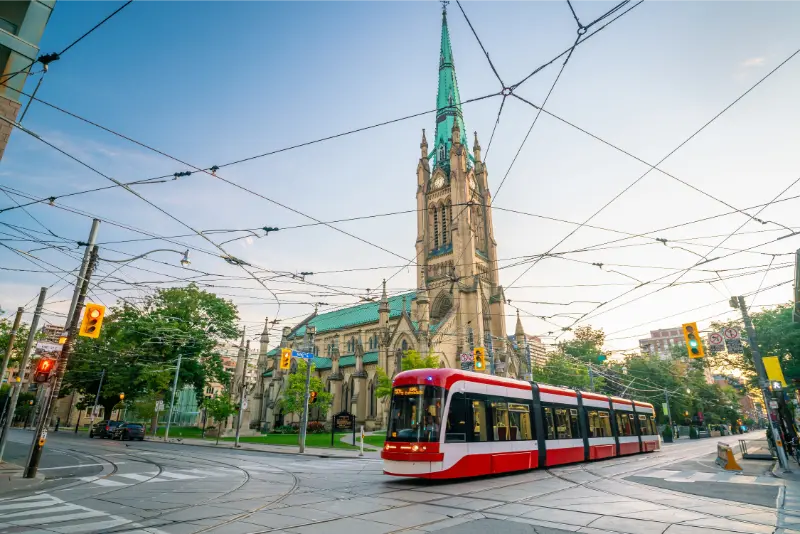
Streetcars make east-west movement practical, although traffic can affect speed. If you are sensitive to noise, read hotel reviews carefully rather than assuming an upper floor solves every late-night problem.
Kensington Market and Chinatown
Kensington is one of Toronto’s most distinctive areas for casual food, independent shops and colourful streets. Chinatown adds another layer of dining and urban energy nearby. The area is excellent to explore even if you stay elsewhere.
Accommodation inventory is smaller and more varied than in the downtown hotel core, so first-time visitors should check property quality and transit access carefully. The reward is a base that feels less corporate and more neighbourhood-oriented.
The Annex
The Annex is a strong option for travellers who want residential streets, cafés and proximity to the University of Toronto while still being close to central attractions. Subway access can make it surprisingly practical.
It suits longer stays particularly well because daily life feels easier: groceries, casual restaurants and parks are woven into the neighbourhood rather than concentrated inside a tourism district.
Distillery District and east downtown
The Distillery District is beautiful for walking, dining and seasonal events, but it is not always the most convenient base for a first visit because subway access is less direct. Nearby east-downtown areas can still be good choices if your hotel has easy streetcar or bus connections.
Think of the Distillery District primarily as a place to visit unless you find a property that fits the rest of your route. Do not choose a hotel based on one picturesque block if most of your trip is elsewhere.
Where families should stay
Families usually benefit from predictable transport, nearby food and enough space in the room. Downtown, Harbourfront and areas near major subway stations are often easiest. Our Canada with kids guide covers broader family pacing.
Apartment-style accommodation can be useful for breakfast and laundry, but check legal status, cancellation rules and recent reviews. A pool may matter more to children after a long sightseeing day than an adults-only design feature.
Where couples should stay
Couples have more flexibility. Yorkville works for an upscale city break, Queen/King West for restaurants and evening energy, and the waterfront for a calmer scenic base. Choose the area that matches how you want to spend evenings, because that is when neighbourhood differences are most noticeable.
For an anniversary or special trip, I would rather pay for a room in the right district than commute back to a cheaper hotel after dinner every night.
Do you need a car in Toronto?
For most city itineraries, no. Parking is expensive, traffic can be frustrating and public transport covers the areas visitors use most. If Toronto is the start of an Ontario road trip, collect the rental car on departure day. See our driving in Canada guide.
This approach works especially well if you continue to Niagara-on-the-Lake, Muskoka or Algonquin.
How to choose in five minutes
Choose Downtown/Entertainment District if this is your first short visit and sightseeing convenience matters most.
Choose Yorkville for museums, shopping and a polished stay.
Choose Queen/King West for restaurants and nightlife.
Choose Harbourfront for lake access and a central but more open feel.
Choose the Annex or Kensington area for a more neighbourhood-based experience.
After choosing the area, compare recent reviews for noise, transit, room size and construction. Those practical details often matter more than a neighbourhood’s reputation.
Extra planning notes for Toronto neighbourhoods
Before finalizing this part of your Ontario trip, check the route on a map at the same time as your hotel reservations. Distances that look minor on a province-wide map can still mean a long drive, especially once traffic, fuel stops, parking and meal breaks are included. I prefer to calculate door-to-door time and then add a buffer rather than planning around the fastest estimate shown by a navigation app.
Keep one low-commitment period in every two or three travel days. Ontario weather can change quickly, popular parking areas can fill, and a lake or trail may deserve more time than expected. A free afternoon lets you respond without sacrificing a prepaid activity later in the trip. It is also useful after a long international flight or several consecutive hotel changes.
For outdoor stops, download maps or confirmations before leaving reliable mobile coverage. Carry water, weather layers and a basic first-aid kit in the car, and never assume a rural attraction has the same opening hours or services as a city destination. In shoulder season, confirm restaurants, boat trips, visitor centres and rental outlets directly because operating days can change.
Finally, treat time-sensitive information as something to re-check shortly before departure. Park access, parking reservations, ferry schedules, road work, fire restrictions and temporary wildlife closures can all change. Dreaming of Canada can help you build the itinerary, but the official park, ferry or attraction website should always be the final source for the exact day you travel.
Frequently asked questions
What is the best area to stay in Toronto for first-time visitors?
Downtown and the Entertainment District are the easiest all-round choices because many major sights are walkable and transit connections are good.
Is Toronto safe for tourists?
Toronto is generally considered a major city where normal urban precautions are appropriate. Conditions vary block by block and over time, so use current local advice and standard awareness, especially late at night.
Is Yorkville too far from the CN Tower?
No, but it is not next door. The subway makes the trip straightforward, and Yorkville may be a better base if museums, restaurants and a quieter evening atmosphere matter more to you.

Should I stay near Toronto Pearson Airport?
Only if you have a very early flight, a long layover or business near the airport. For sightseeing, staying near the airport creates unnecessary travel time.
Can I stay outside downtown to save money?
Yes, especially near a good subway station. Compare the total time and transit cost with the hotel savings before deciding.
Final thoughts
There is no single “best” Toronto neighbourhood; there is a best match for your trip. For a first short visit, convenience usually wins. For a longer stay, character and daily routine become more important.
Once your base is chosen, use our 10-day Ontario road trip if Toronto is the start of a larger province-wide journey.
Disclosure: some links in this article may be affiliate links. If you make a booking through them, Dreaming of Canada may earn a commission at no extra cost to you.