
Vancouver may have the strongest day-trip geography of any major Canadian city. Mountains rise directly behind the urban area, islands sit across the water and the Sea-to-Sky Highway reaches completely different landscapes within a short drive. The challenge is not finding somewhere to go; it is deciding how much transport you want to accept for one day. A 20-minute ferry to Bowen Island and a full Vancouver-to-Victoria excursion are both called “day trips”, but they create very different days.
This guide compares the best day trips from Vancouver by travel time, transport, season and the kind of experience you actually get. If you are still planning the city itself, start with our Vancouver Travel Guide and the broader British Columbia Travel Guide. For national logistics, see Best Time to Visit Canada, How to Get Around Canada and Driving in Canada.
| Best first day trip | Whistler via the Sea-to-Sky Highway |
|---|---|
| Best shorter escape | Squamish |
| Car needed? | Useful for most trips, but not always essential |
| Best planning rule | One major destination per day; add only nearby stops |
How to choose a day trip from Vancouver
Start with total door-to-door time, not the distance shown on a map. Add time for city traffic, parking, ferry or shuttle check-in, food stops and the return journey. As a rule, I prefer day trips where the outward leg is under two hours. Longer journeys can still be worthwhile, but only when the destination is exceptional and you are comfortable giving most of the day to it.
Next decide what you are trying to change about the city trip. After several museum and restaurant days, a lake or trail usually feels better than another historic centre. After a long road trip, the opposite may be true: a compact town with lunch and a short walk can be more restorative than another mountain objective. This simple question prevents you from choosing a famous excursion that does not match your energy.
Do you need a car for day trips from Vancouver?
Vancouver is unusually flexible because some of the best day trips work by coach, ferry or public transport. A car gives you freedom on the Sea-to-Sky Highway and Sunshine Coast, but parking and ferry reservations can become the real planning issue. For ferry days, always check terminal, check-in rules and sailing status rather than relying on an old itinerary.
Without a car: Bowen Island is excellent without a car: public transport reaches Horseshoe Bay and the ferry crossing is short. Whistler has frequent coach services, and Victoria can be done with coach-and-ferry combinations, although the full journey makes it a long day.
The best day trips from Vancouver
1. Whistler via the Sea-to-Sky Highway
Travel time: about 2 hours each way. Best for: mountain scenery, gondolas and a full resort day.
Whistler is the classic excursion because the route is part of the attraction. The Sea-to-Sky Highway passes ocean inlets, waterfalls and mountain viewpoints before reaching the pedestrian village. If you drive, resist the temptation to stop everywhere on the outward journey or you will arrive after lunch.
Choose one Whistler focus: the gondola network, village and lakes, hiking, or skiing in winter. If you want several Sea-to-Sky stops as well, turn the day into a road trip and make Whistler the final destination rather than the only destination. Coach services make this one of the easier mountain trips without a car.

When it works best: year-round, with summer and winter peaks.
2. Squamish
Travel time: about 1 hour. Best for: hiking, waterfalls and dramatic mountain scenery.
Squamish gives you much of the Sea-to-Sky drama with less time in the vehicle than Whistler. Shannon Falls, the Sea to Sky Gondola area and trail networks make it easy to build a day around one major outdoor activity and still return to Vancouver before dinner.
The town itself is useful for food and supplies, while the surrounding landscape is the main reason to go. Weather can change quickly and some hikes are serious mountain objectives, so choose trails by conditions and experience rather than by social-media popularity.
When it works best: best from late spring to autumn; winter depends on activity.
3. Bowen Island
Travel time: roughly 1 hour from downtown including transfers when connections align. Best for: car-free island atmosphere and a relaxed escape.
Bowen Island is the easiest way to make Vancouver feel far away without actually travelling far. Destination Vancouver notes that the ferry leaves Horseshoe Bay and the crossing itself is short. Once in Snug Cove you can walk, eat, hike nearby trails or use local transport without trying to cover the entire island.
This is the day trip for travellers who do not want an itinerary full of “must-sees”. Take an early ferry, choose a short hike or beach, have a long lunch and leave enough buffer for the return sailing. Public transport to Horseshoe Bay means renting a car is unnecessary for a simple visit.
When it works best: excellent spring through autumn, peaceful in winter.
4. Victoria
Travel time: a long full-day journey involving road and ferry time. Best for: gardens, history and a different city atmosphere.
Victoria is possible from Vancouver in one day, but it should be treated as a major excursion rather than a casual add-on. The ferry through the Gulf Islands is scenic, then you still need to reach central Victoria from Swartz Bay. That transport time is why an overnight is better if your schedule allows.
If you only have one day, focus on the Inner Harbour, historic centre and one additional priority such as the Royal BC Museum or Butchart Gardens—not both plus a whale tour. Organized coach packages simplify the connections, while independent travellers need to coordinate ferry and local transit carefully.
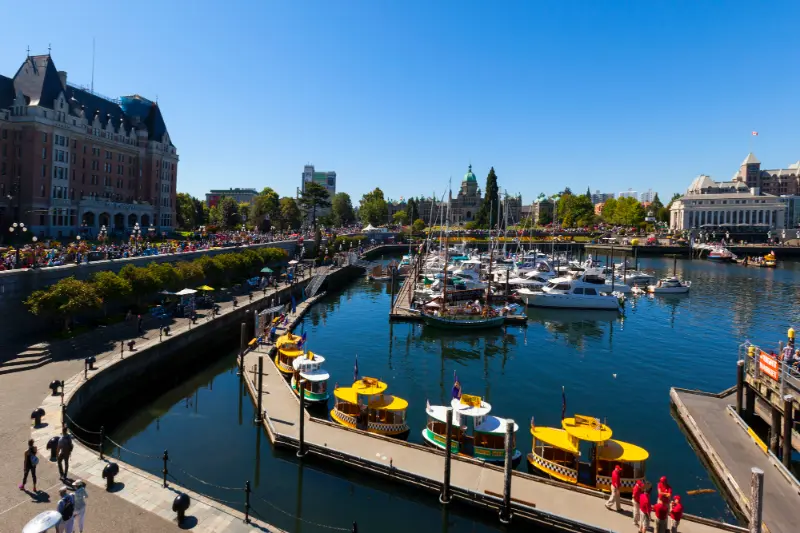
When it works best: year-round, best with long daylight in spring and summer.
5. Sunshine Coast and Gibsons
Travel time: ferry plus local driving. Best for: coastal villages, slower pace and ocean views.
The Sunshine Coast is on the mainland but feels island-like because road access from Vancouver requires a ferry. Gibsons is the most practical first target for a day trip, with waterfront views, restaurants and nearby beaches. Going much farther north starts to turn the day into a transport exercise.
If driving onto the ferry, reserve when the route and season make that advisable and arrive within the required check-in window. Foot passengers can keep the day simpler but need a plan for local movement after landing. This is better for slow travel than attraction collecting.
When it works best: late spring through early autumn is easiest.
6. Steveston and Richmond
Travel time: about 30–45 minutes. Best for: food, fishing-village history and an easy half-day.
Steveston is technically within Metro Vancouver, but it feels sufficiently different to work as a low-effort day trip. The historic fishing village, waterfront, Gulf of Georgia Cannery area and seafood restaurants make it especially useful when the weather is mixed or you do not want a long drive.
Combine Steveston with Richmond’s food scene rather than adding another distant destination. This is also a good choice on the first or last day of a trip if you are staying near Vancouver International Airport.
When it works best: year-round.
7. Deep Cove and the North Shore
Travel time: about 30–45 minutes. Best for: paddling, forest walks and a short nature escape.
Deep Cove sits close to Vancouver but gives you inlet scenery, forest and access to paddling or hiking. It works especially well for travellers who want to be outdoors without sacrificing an entire day to highway or ferry travel.
Parking pressure can be intense on sunny weekends, so public transport or an early start can be smarter than driving at midday. Treat popular trails as real hikes, bring water and turn back if conditions are poor.
When it works best: spring through autumn, with wet-weather caution.
Best day trips from Vancouver by season
Summer has the most ferry frequency and hiking access; autumn is excellent for quieter coast and mountain drives; winter turns Whistler into a snow trip while low-elevation coast remains milder; spring can be beautiful but mountain conditions are variable.
Season also changes daylight. A route that feels comfortable in July can feel completely different in November when sunset arrives early. For winter excursions, build extra time into every transfer and be willing to cancel if a storm, road warning or ferry disruption makes the return uncertain. In summer, the problem is usually the opposite: crowds, parking pressure and heat can make an early start much more valuable than another hour of sleep.
Where to stay in Vancouver if you are planning several day trips
If you plan two or more excursions, location matters more than it does on a pure city break. A hotel near the main highway exit, rail station or departure point can save an hour across several days, but I would not move far into the suburbs unless every day is a road trip. You still want evenings that are easy for restaurants and walking. Compare current accommodation on Booking.com for Vancouver.
A simple way to build the itinerary
For a four-night stay, spend the arrival day and the next full day in Vancouver, take your highest-priority excursion on day three, return to the city for dinner, and keep day four flexible. If you have five or six nights, add a second day trip that is deliberately different from the first—for example, one nature day and one food or heritage day. That creates variety without turning the trip into a sequence of early alarms and long drives.
Do not schedule the most weather-dependent excursion on your final possible day. Mountain viewpoints, boat trips, beaches and long outdoor walks all benefit from flexibility. If the forecast looks poor, swap that day with an indoor city day instead of forcing the original order.
Common mistakes to avoid
- Trusting map time literally: urban exits, ferries, road works and parking can add significant time.
- Combining destinations that belong on separate days: a famous place is not improved by arriving tired and leaving after one hour.
- Ignoring fixed reservations: ferries, cruises, parking systems, tours and seasonal attractions can dictate the whole schedule.
- Leaving the return too late: darkness, fatigue and weather matter more on unfamiliar roads.
- Not checking the official site: seasonal closures and access rules can change after an article is published.
FAQ: day trips from Vancouver
What is the best first day trip from Vancouver?
For most first-time visitors, Whistler via the Sea-to-Sky Highway is the strongest starting point because it combines a clear sense of place with a manageable single-day structure. That does not make it the best choice for every season or traveller, so compare it with the shorter alternatives above.
Is it worth renting a car for only one day?
Often, yes. Renting only for the excursion can be cheaper and easier than keeping a vehicle during central city days, especially once hotel parking is included. Compare the rental location’s opening hours with your planned early departure and late return.
How far is too far for a day trip?
I usually treat two hours each way as the upper comfortable limit. Three hours each way can be justified for a once-in-a-lifetime destination, but at that point an overnight often creates a better trip and safer driving.
Should I book a guided tour instead of driving?
A guided tour makes sense when the day involves wine tasting, difficult ferry logistics, winter driving you are not comfortable with or a destination where parking is highly constrained. Driving is better when your priority is flexibility and several small stops.
How much should I budget for a day trip?
Costs vary enormously: a self-guided hike may cost little beyond transport and park fees, while a ferry, wine tour or attraction-heavy day can be expensive. Use our Canada trip cost guide as a baseline, then add rental car, fuel, admissions and meals for the specific day.
Useful official resources
Disclosure: some links in this article may be affiliate links. If you make a booking through them, Dreaming of Canada may earn a commission at no extra cost to you.