
Québec City feels different from any other major stop on a classic Canada itinerary. The historic core is compact, the fortified streets rise and fall between Upper Town and Lower Town, and the St. Lawrence River is always part of the view. It is one of the few places where I would happily spend a day with almost no attraction reservations—just walking, looking, eating and changing direction when a street becomes interesting.
Old Québec has been a UNESCO World Heritage Site since 1985 and is the most intact fortified town north of Mexico. That history is not confined to a museum; it shapes the streets you walk through.
How many days do you need?
Two nights is enough to understand the historic centre, but three nights is better. It gives you two full days plus time for Montmorency Falls, Île d’Orléans or simply a slower final morning.
1. Upper Town and the fortifications
Begin in Upper Town. The walls, gates and historic streets immediately establish the city’s character. Walk without trying to follow the shortest route. The slopes and viewpoints are part of the experience.
2. Château Frontenac and Terrasse Dufferin
Château Frontenac dominates the skyline even if you are not staying there. Terrasse Dufferin in front of the hotel is one of the essential walks, with broad river views and easy access to paths connecting Upper and Lower Town.
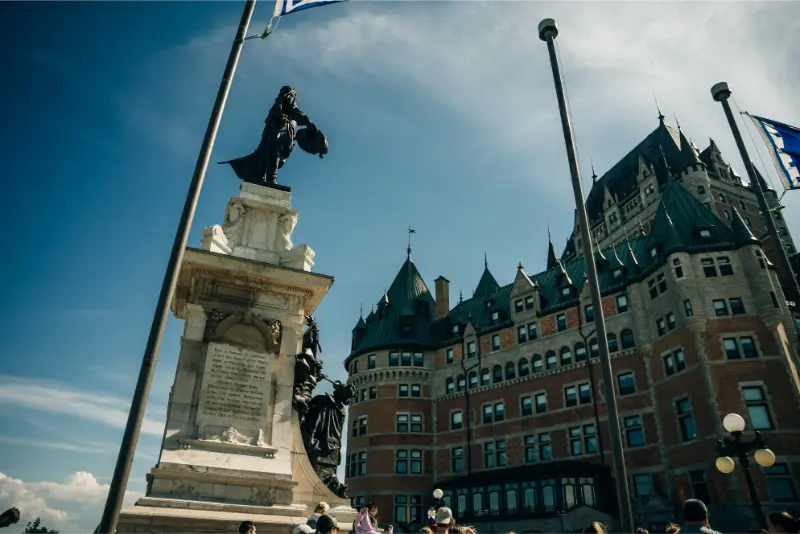
3. Petit-Champlain
Petit-Champlain is one of the most photographed parts of the city, with narrow streets, shops and historic façades. Go early if you want quieter photographs, then return later for the atmosphere. It is attractive but popular, so do not assume every restaurant on the main lane is automatically the best dining choice.
4. Place Royale
Place Royale helps tell the story of early French settlement and works naturally with a Lower Town walk. Take time to look at the surrounding architecture rather than using it only as a photo stop.
5. Old Port
The Old Port extends the historic-centre experience with galleries, shops, waterfront atmosphere and easier walking than some of the steep streets above. It is particularly pleasant when you want a quieter break from the busiest sections inside the walls.
6. Plains of Abraham
The Plains of Abraham combine major historical importance with open green space. They are useful when you need a break from narrow streets and give you another perspective on the city’s military history.
7. Parliament Hill
The Parliament Building and nearby streets sit just outside the old walls and are easy to include in a walking itinerary. This area also connects you toward Grande Allée and restaurants.
Montmorency Falls
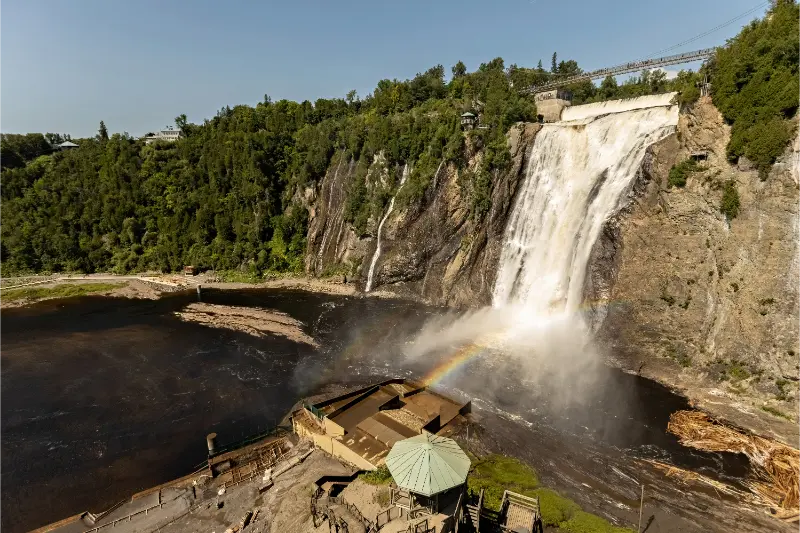
Montmorency Falls are close enough to add without turning the trip into a major expedition. They are higher than Niagara Falls, although the overall experience is very different. You can see the falls from multiple levels and combine the excursion with other nearby stops if you have a car or tour.
Île d’Orléans
Île d’Orléans is a good option for travellers who want farms, local products and countryside scenery. A car or organized tour makes it much easier. If you have only two days in Québec City, I would stay focused on the city rather than rushing the island.
Where to stay in Québec City
Inside Old Québec
Best for atmosphere and a short first trip. You can walk out of the hotel and immediately be in the historic core. Rooms can be more expensive, and steep streets or stairs matter if mobility is limited.
Saint-Roch
More contemporary, with restaurants and local urban life. It can offer better value and a different experience from the postcard centre.
Near Parliament Hill / Grande Allée
A useful compromise between historic access, restaurants and transport.
Compare current stays on Booking.com Québec City.
Getting around
Old Québec is best explored on foot, but expect hills, stairs and uneven surfaces. Comfortable shoes matter. Local buses are useful for longer urban trips. A car is not necessary for the historic centre and can become a parking burden.
If you arrive by train from Montréal, staying centrally makes the whole visit simple. See our Canada transport guide for eastern route planning.
What to eat
Québec cuisine deserves its own attention. Look beyond one famous dish. Try local cheeses, maple products, bakery items and restaurants that use regional ingredients. In colder months, hearty dishes fit the setting perfectly; in summer, terraces and markets change the rhythm of meals.
French language tips
French is the official language of Québec. In the historic tourist centre, many people working with visitors can communicate in English, but beginning with “Bonjour” is both polite and practical. Menus and signs may be primarily French, so a translation app can be useful if you are not familiar with the language.
Best time to visit
Summer gives you long walking days and outdoor dining, but the historic centre is busy. Early autumn adds colour and cooler temperatures. Winter can be spectacular if you want snow and seasonal atmosphere, especially around winter events, but proper clothing is essential. Spring is quieter and less predictable.
Use our best time to visit Canada guide if you are combining Québec City with other regions.
A 3-day Québec City itinerary
Day 1: Upper Town and Lower Town
Walk the fortifications, Château Frontenac/Terrasse Dufferin area, then descend to Petit-Champlain and Place Royale. Stay in the old city for dinner.
Day 2: Plains of Abraham, Parliament and Old Port
Start with the Plains of Abraham and Parliament Hill, then spend the afternoon around Old Port and lesser-known streets inside the walls. Use the evening for a relaxed restaurant rather than another major attraction.
Day 3: Montmorency Falls or Île d’Orléans
Choose one. If weather is poor, keep the day in the city for museums, food and shopping.
Québec City with children
The old streets can feel like a storybook, which helps with children, but hills and cobbles can be tiring. Do fewer attractions and include parks or open spaces. In winter, plan regular indoor breaks.
Québec City for couples
This is one of Canada’s easiest romantic city breaks. Stay centrally, avoid over-scheduling and use early morning or evening for the old streets when day-trip crowds are lower.
Québec City in winter
Snow changes the city completely. The visual reward is high, but so is the need for preparation. Warm boots with traction, layers, gloves and a hat are not optional. Shorter outdoor blocks with cafés and museums between them work better than trying to walk outside for eight straight hours.
Montréal or Québec City?
Do both if you can. Montréal is larger, more diverse in neighbourhood scale and more contemporary. Québec City is smaller, more concentrated and more historic in appearance. Travelling between them creates contrast without crossing the country.
Read our Montréal travel guide and connect the two in the Eastern Canada itinerary.
Common mistakes
- Visiting only for a few hours on a tour bus.
- Booking a car for the entire stay when you plan to remain in Old Québec.
- Underestimating hills and winter surfaces.
- Eating every meal on the busiest tourist street.
- Trying to add both Montmorency Falls and Île d’Orléans to a very short visit.
Final thought
Québec City is a place where slowing down improves almost everything. The best memories are often not the “top ten” sights but the transitions between them: a staircase to Lower Town, a river view between buildings, a bakery stop, or the old walls at a quiet hour. Give the city at least two full days and let part of the itinerary remain unplanned.
How much does Québec City cost?
Accommodation inside the walls often carries a premium because the location is part of the experience. You can save by staying just outside Old Québec or in Saint-Roch, but compare the actual walking route—especially uphill—before choosing a cheaper room. Food ranges from bakeries and casual bistros to high-end dining, while many of the most atmospheric experiences are simply walks through the old city.
Accessibility, hills and stairs
Québec City is compact but not flat. Upper Town and Lower Town are connected by steep streets, stairs and the funicular. Travellers with reduced mobility should check hotel access carefully because charming historic buildings may have steps or small lifts. Using the funicular and buses can dramatically reduce the amount of climbing.
Good day trips if you have a fourth day
With an extra day, you can choose between Montmorency Falls, Île d’Orléans or a countryside excursion rather than trying to squeeze all three into one afternoon. In autumn, a regional drive can add fall colour; in winter, a planned snow activity can create a completely different trip. The key is to add one extension, not turn Québec City into a base for constant commuting.
If you are travelling without a car, prioritize excursions with clear return transport and keep your final evening in the city. That avoids turning a beautiful day trip into a stressful race back for dinner, a train or an early departure the next morning.
Disclosure: some links in this article may be affiliate links. If you make a booking through them, Dreaming of Canada may earn a commission at no extra cost to you.
Explore more of Québec
Best day trips from Québec City · Charlevoix guide
Québec food and culture ideas
Maple syrup and sugar shacks · Poutine guide · Best museums in Canada
Visiting with children
Québec City with Kids: Old Québec, Family Attractions and a 4-Day Itinerary
Airport arrival guide
Flying into Québec City? Read our Québec City Airport YQB Guide: Downtown Transport, Buses and Arrival Tips for public transport, taxis, car rental and first-night planning.
Arriving from Montréal
See our Montréal to Québec City: Train, Car, Bus and Flight Guide for a practical comparison of transport options and route planning.
Getting to Tadoussac
Continuing from Québec City? Read our Québec City to Tadoussac: Car, Bus, Ferry and Road Trip Guide for train, road, coach and seasonal transport options.
When should you go?
Choosing dates? Read our Best Time to Visit Québec City: Seasons, Crowds, Fall Colours and Winter for month-by-month weather, crowds and seasonal access.
3-day itinerary
If you want a day-by-day plan, read our 3 Days in Québec City: The Perfect First-Time Itinerary.
Neighbourhoods and where to stay
Choosing the right base can change the whole trip. Read our Québec City Neighbourhoods Guide: Where to Stay in Old Québec and Beyond.
Getting around Québec City
For public transport, walking, fare payment and car-rental strategy, read our How to Get Around Québec City: RTC Buses, Walking, Funicular and Car-Free Tips.
More island and coastal inspiration
For a more focused escape, see our Île d’Orléans Travel Guide: Villages, Food, Farms and Québec City Day Trip.
Planning a winter trip?
Read our Québec City in Winter: Carnival, Snow, Old Québec and a 3-Day Itinerary.
Visiting in summer?
Read our Québec City in Summer: Festivals, Old Québec, Nature and a 4-Day Itinerary.
Visiting in spring?
Read our Québec City in Spring: Maple Season, Old Québec, Nature and a 4-Day Itinerary.
Visiting in fall?
Read our seasonal guide: Québec City in Fall.
Accessibility planning
For step-free routes, mobility needs and practical access details, read our Accessible Québec City guide.
Food and local flavours
For regional specialties, markets, dining neighbourhoods and a practical two-day eating plan, read our Québec City Food Guide: Traditional Québécois Food, Markets and a 2-Day Food Itinerary.
Free things to do
Travelling on a tighter budget? See our Free Things to Do in Québec City: Old Québec Walks, Views and a 2-Day Budget Plan for parks, public spaces and no-admission experiences.
Hidden gems and unusual places
Want to go beyond the classic sights? Read our Québec City Hidden Gems: 10 Historic Corners and Neighbourhoods Beyond the Classics for local parks, neighbourhood corners, viewpoints and lesser-known places.
What to do when it rains
Keep a bad-weather backup ready with our Québec City on a Rainy Day: 15 Indoor Things to Do and a Bad-Weather Itinerary, including indoor attractions, museums, family ideas and a practical two-day plan.
Airport to downtown transfer
Arriving by air? Read our Québec City Airport to Downtown: RTC Bus, Taxi, Rideshare and YQB Guide for public transport, taxi, rideshare, luggage, late-night and return-to-airport advice.
Where to stay
Choosing the right neighbourhood can save time every day. Read our where to stay in Québec City guide for area-by-area advice for first visits, families, nightlife, food and value.
Travelling solo
If you are visiting on your own, our solo travel in Québec City guide covers where to stay, transport, dining alone, evening plans, budget and a practical three-day itinerary.
Before you go
For practical logistics, current transport habits and easy-to-make planning errors, read Things to Know Before Visiting Québec City: Practical Tips, Hills, Old Québec and Common Mistakes.
Planning a couples getaway?
For romantic walks, neighbourhoods, sunset ideas, dining and a relaxed three-day plan, see Romantic Québec City: Best Things to Do for Couples and a 3-Day Getaway.
Weekend escapes from Québec City
If you have two or three extra days, see our Best Weekend Getaways from Québec City for nearby small towns, nature, transport options and realistic two-day trip ideas.
How many days do you need?
How Many Days in Québec City? The Best Length for Old Québec and Day Trips