
Montréal is a city I would never reduce to a list of attractions. The best days here move between old stone streets, parks, bakeries, markets, cafés and residential neighbourhoods. You can spend the morning around a major basilica, the afternoon on a mountain trail and the evening eating in a part of the city that feels completely different from both.
For a first visit, I would aim for three full days. Two days can cover the highlights, but Montréal rewards unplanned time. It is also one of the easiest major Canadian cities to explore without a car.
Why Montréal belongs on a first Canada trip
Montréal gives you a cultural contrast with Toronto while staying easy to reach by rail. French is central to the city, but visitors will hear plenty of English in tourism contexts. Food is a major part of the experience, from bagels and smoked meat to markets, bakeries and modern restaurants.
Tourisme Montréal describes the city through distinct neighbourhoods rather than one central tourist zone. That is exactly how I recommend planning it.
1. Old Montréal
Old Montréal is the obvious place to begin. Cobblestone streets, historic buildings, Place Jacques-Cartier and the Old Port create the classic visitor image. Notre-Dame Basilica is one of the central landmarks.
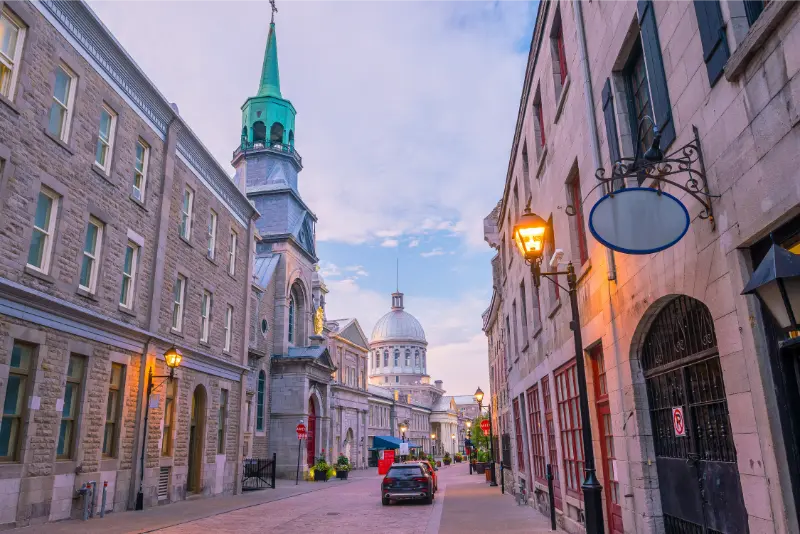
Go early in the morning if you want quieter streets, then return in the evening when restaurants and lighting change the atmosphere.
2. Old Port
The waterfront beside Old Montréal works well for walking and seasonal activities. It is tourist-friendly and easy to combine with the historic district, but do not let it consume the whole day; Montréal’s character becomes stronger when you move into neighbourhoods where people actually live.
3. Mount Royal
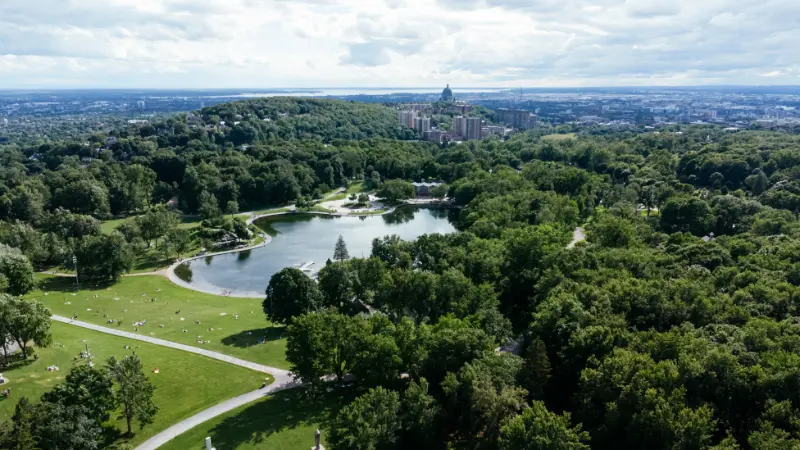
Mount Royal is the city’s green landmark and one of the best places for a skyline view. Walking to the Kondiaronk lookout is a classic first-visit experience. The park also helps explain Montréal’s geography and gives you a break from streets and museums.

In winter, conditions can be icy. Wear suitable footwear rather than assuming a city park is always an easy stroll.
4. Plateau-Mont-Royal
The Plateau is where colourful façades, staircases, cafés, bakeries and local streets come together. It is a neighbourhood for wandering. Instead of pinning ten locations, choose a few streets and let the day develop naturally.
5. Mile End
Mile End, part of the Plateau-Mont-Royal borough, is known for independent shops, cafés, bakeries and food culture. Tourisme Montréal highlights it as one of the city’s most distinctive neighbourhoods. This is a good area to slow down after a morning of major sights.
6. Downtown and Quartier des Spectacles
Downtown is practical for hotels, shopping, museums and transport. The Quartier des Spectacles hosts major festivals and performances. If your trip overlaps with an event, hotel prices and street closures may change, so check the calendar before booking.
7. Markets
Jean-Talon Market and Atwater Market are both excellent food stops. You do not need to visit both on a short trip; choose the one that fits your route. Markets are best treated as part of lunch or a neighbourhood day rather than an isolated attraction.
What to eat in Montréal
Food traditions are part of the city’s identity. Try Montréal-style bagels, smoked meat and poutine, but do not stop there. The city’s restaurant scene reflects communities from around the world, and neighbourhood bakeries and casual counters can be as memorable as formal dining.
If you have famous institutions on your list, expect queues at peak times. Use them if the experience matters to you, but never assume that the most photographed place is the only place worth eating.
Where to stay in Montréal
Old Montréal
Best for atmosphere, historic streets and a romantic first visit. The trade-off can be higher prices and a more tourist-oriented environment.
Downtown
Best for transport, shopping, museums and travellers who want maximum convenience.
Plateau / Mile End
Best for neighbourhood feel, cafés, restaurants and travellers who do not need to be beside every major attraction.
Compare hotels on Booking.com Montréal and check the nearest métro station before booking.
Getting around Montréal
The métro is simple to use and covers many visitor areas, with buses extending the network. Central neighbourhoods are walkable, and cycling can be excellent in warmer months. A rental car is usually unnecessary for a short city stay.
If you are continuing on a Québec road trip, consider picking up the car when you leave Montréal rather than paying for downtown parking while it sits unused.
Arriving by train
Montréal fits naturally into an eastern Canada rail itinerary. Toronto to Montréal averages around five hours on many VIA Rail services. Québec City is also linked by rail. This makes Montréal one of the easiest places to integrate into a first Canada trip without a car.
See our Canada transport guide for route-planning advice.
How many days in Montréal?
Two days: Old Montréal, Mount Royal and one neighbourhood. Three days: ideal first visit with time for food, a market and museums. Four days: lets you slow down or take a day trip.
A simple 3-day Montréal itinerary
Day 1: Old Montréal and Old Port
Start around Notre-Dame Basilica, walk the old streets, lunch nearby, then continue along the Old Port. Use the evening for dinner and a second walk when the historic district is lit.
Day 2: Mount Royal, Plateau and Mile End
Walk or transit toward Mount Royal, enjoy the lookout, then descend toward Plateau. Continue into Mile End for food and shops. This is the day to avoid over-scheduling.
Day 3: market, museum and Downtown
Choose Jean-Talon or Atwater Market, add a museum that genuinely interests you, then finish around Downtown or Quartier des Spectacles.
Montréal with children
The métro, parks, markets and family attractions make Montréal manageable with children. Avoid building a day that crosses the city repeatedly. Group Old Montréal and Old Port together, then devote another day to Mount Royal and nearby neighbourhoods.
Montréal in winter
Winter is not a reason to skip the city if you enjoy seasonal travel. It does require serious clothing and realistic walking expectations. The métro and underground connections become more useful, and museums, cafés and restaurants create natural warm-up stops.
Montréal in summer
Summer brings festivals, terraces, cycling and long evenings. It can also bring busy weekends and higher accommodation demand around major events. If a festival is the reason you are travelling, book early; if it is not, check whether your dates accidentally overlap with one.
Day trips from Montréal
Possible extensions include countryside, small towns, nature areas and seasonal experiences in Québec. For a first two-week Canada trip, however, I would usually continue to Québec City rather than adding multiple day trips. The contrast between the two cities is worth the travel time.
Montréal vs Québec City
Do not choose one because they seem similar. Montréal is larger, more contemporary and neighbourhood-driven. Québec City is smaller, more concentrated and visually historic. They work best together.
Continue with our Québec City travel guide.
Where Montréal fits into a Canada itinerary
A classic route is Toronto → Niagara Falls → Montréal → Québec City, with Ottawa added if time allows. Our two-week Canada itinerary shows how to structure the route without driving the whole way.
Practical tips
- Use a few French greetings even if you continue the conversation in English.
- Do not spend every meal in Old Montréal.
- Wear shoes suited to hills and long walks.
- Check festival dates before booking hotels.
- Choose one market rather than racing between both on a short trip.
- Stay near a métro station if your hotel is outside the central core.
Final thought
Montréal becomes memorable when you stop trying to “finish” it. See the landmarks, but leave an afternoon for streets that are not on your list, a bakery you did not research and a park bench with a coffee. That balance of major sights and everyday neighbourhood life is what makes the city one of the strongest stops on a first Canadian journey.
Budget and practical costs
Montréal can be easier to enjoy on a moderate budget than many travellers expect because so much of the experience is neighbourhood-based. Walking Mount Royal, exploring Plateau streets and browsing markets costs little. Your main expenses are accommodation, restaurants and ticketed attractions. Hotel prices can rise sharply around festivals, so checking the event calendar is one of the most useful money-saving steps.
Accessibility and walking conditions
Central Montréal is walkable, but weather changes the experience. Snow, ice and summer heat can make the same distance feel completely different. The métro reduces long outdoor transfers, and many major attractions publish accessibility information. If stairs or slopes are a concern, plan routes by station and entrance rather than only by straight-line distance.
For a relaxed first visit, it also helps to choose one side of the city for each half-day. Repeatedly crossing Montréal for individual restaurants or photo spots can consume more time than the attraction itself. Neighbourhood clustering makes the trip feel much more local and much less like commuting.
Disclosure: some links in this article may be affiliate links. If you make a booking through them, Dreaming of Canada may earn a commission at no extra cost to you.
Explore more of Québec
Montréal neighbourhoods · Québec travel guide
More Montréal food and culture
Best food cities in Canada · Poutine guide · Best festivals in Canada
Visiting with children
Montréal with Kids: Museums, Parks, Food and a 4-Day Family Itinerary
Best day trips from Montréal
Best Day Trips from Montréal: Laurentians, Eastern Townships, Ottawa and More
Airport arrival guide
Flying into Montréal? Read our Montréal Airport YUL Guide: 747 Bus, Downtown Transport and Arrival Tips for public transport, taxis, car rental and first-night planning.
Arriving from Toronto
See our Toronto to Montréal: Train, Car, Flight and Bus Guide for a practical comparison of transport options and route planning.
Getting to Québec City
Continuing from Montréal? Read our Montréal to Québec City: Train, Car, Bus and Flight Guide for train, road, coach and seasonal transport options.
When should you go?
Choosing dates? Read our Best Time to Visit Montréal: Festivals, Weather, Fall Colours and Winter for month-by-month weather, crowds and seasonal access.
3-day itinerary
If you want a day-by-day plan, read our 3 Days in Montréal: The Perfect First-Time Itinerary.
Getting around Montréal
For public transport, walking, fare payment and car-rental strategy, read our How to Get Around Montréal: Metro, Buses, OPUS, BIXI and Car-Free Tips.
Travel by train
See our VIA Rail The Ocean Guide: Montréal to Halifax Overnight Train.
Planning a winter trip?
Read our Montréal in Winter: Festivals, Snow, Food and a 3-Day Itinerary.
Visiting in summer?
Read our Montréal in Summer: Festivals, Parks, Food and a 4-Day Itinerary.
Visiting in spring?
Read our Montréal in Spring: Sugar Shacks, Parks, Food and a 4-Day Itinerary.
Visiting in fall?
Read our seasonal guide: Montréal in Fall.
Accessibility planning
For step-free routes, mobility needs and practical access details, read our Accessible Montréal guide.
Food and local flavours
For regional specialties, markets, dining neighbourhoods and a practical two-day eating plan, read our Montréal Food Guide: Bagels, Smoked Meat, Poutine, Markets and a 2-Day Food Itinerary.
Free things to do
Travelling on a tighter budget? See our Free Things to Do in Montréal: Parks, Festivals, Art and a 2-Day Budget Plan for parks, public spaces and no-admission experiences.
Hidden gems and unusual places
Want to go beyond the classic sights? Read our Montréal Hidden Gems: 10 Quirky Places, Green Alleys and Local Secrets for local parks, neighbourhood corners, viewpoints and lesser-known places.
What to do when it rains
Keep a bad-weather backup ready with our Montréal on a Rainy Day: 15 Indoor Things to Do, Museums and Underground Stops, including indoor attractions, museums, family ideas and a practical two-day plan.
Airport to downtown transfer
Arriving by air? Read our Montréal Airport to Downtown: 747 Bus, REM Connection, Taxi and YUL Guide for public transport, taxi, rideshare, luggage, late-night and return-to-airport advice.
Where to stay
Choosing the right neighbourhood can save time every day. Read our where to stay in Montréal guide for area-by-area advice for first visits, families, nightlife, food and value.
Travelling solo
If you are visiting on your own, our solo travel in Montréal guide covers where to stay, transport, dining alone, evening plans, budget and a practical three-day itinerary.
Before you go
For practical logistics, current transport habits and easy-to-make planning errors, read Things to Know Before Visiting Montréal: Practical Tips, Metro, Language and Common Mistakes.
Planning a couples getaway?
For romantic walks, neighbourhoods, sunset ideas, dining and a relaxed three-day plan, see Romantic Montréal: Best Things to Do for Couples and a 3-Day Getaway.
Weekend escapes from Montréal
If you have two or three extra days, see our Best Weekend Getaways from Montréal for nearby small towns, nature, transport options and realistic two-day trip ideas.
More Canada experiences to consider
How many days do you need?
How Many Days in Montréal? The Ideal Length for Neighbourhoods, Food and Culture