
A good Québec road trip should feel like a journey along the St. Lawrence, not a sequence of hotel check-ins. For ten days, I prefer a route that starts with Montréal, continues to Québec City, then follows the river through Charlevoix to Tadoussac. It gives you two very different cities, small towns, food, mountain scenery and a chance to experience the marine environment without driving all the way around the Gaspé Peninsula. The route is also flexible: you can travel between the cities without a car, collect one in Québec City, and return it in Montréal or Québec City depending on flights.
In this guide: practical planning, the best places to focus on, realistic timing, transport, where to stay, seasonal advice and ideas for linking this destination with the rest of Québec.
| Length | 10 days / 9 nights |
|---|---|
| Best gateways | Montréal or Québec City |
| Car | Useful after the two main cities |
| Core route | Montréal → Québec City → Charlevoix → Tadoussac |
| Best season | Late May to early October |
| Pace | Moderate, with 2–3 night bases |
Days 1–3: Montréal
Spend the first three nights in Montréal and keep the car out of the plan. Use the first afternoon for Old Montréal and the riverfront, then devote the next days to Mount Royal, Plateau Mont-Royal, Mile End, Jean-Talon Market and the canal area. The city works best when you stop trying to cross it for a single attraction every hour.
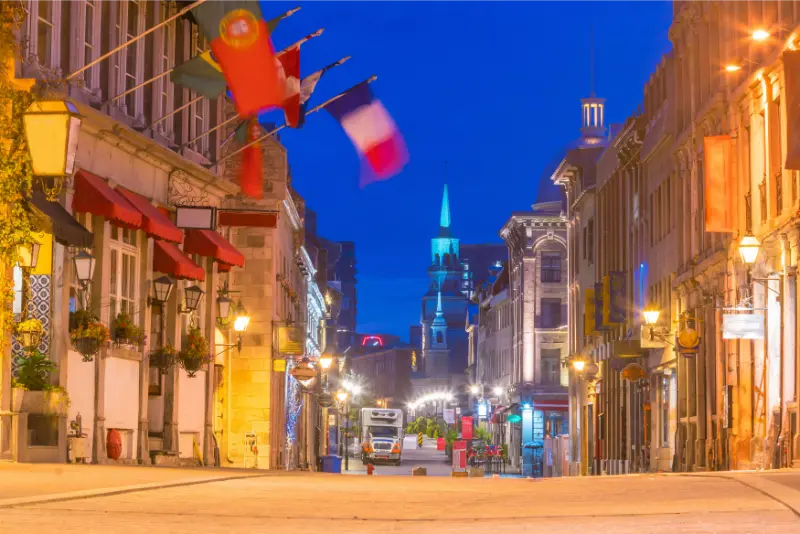
Our Montréal travel guide covers the main sights, while the neighbourhood guide helps choose a base. If your flight lands late, add a fourth Montréal night rather than sacrificing the first full day.
Day 4: Montréal to Québec City
Travel to Québec City in the morning. If you are using rail or intercity bus, this is an easy car-free transfer and avoids city-centre parking. After check-in, spend the afternoon walking Upper Town, Dufferin Terrace, Petit-Champlain and Place-Royale.
Do not attempt to ‘finish’ Québec City in one afternoon. The historic centre is compact, but the pleasure comes from walking it at different times of day. Evening is especially good once day-trip groups thin out.
Day 5: Québec City
Use the second day for the fortifications, Plains of Abraham, museums or neighbourhoods such as Saint-Jean-Baptiste and Saint-Roch, depending on your interests. Food-focused travellers can add a market or guided tasting; families may prefer a slower mix of parks and interactive attractions.

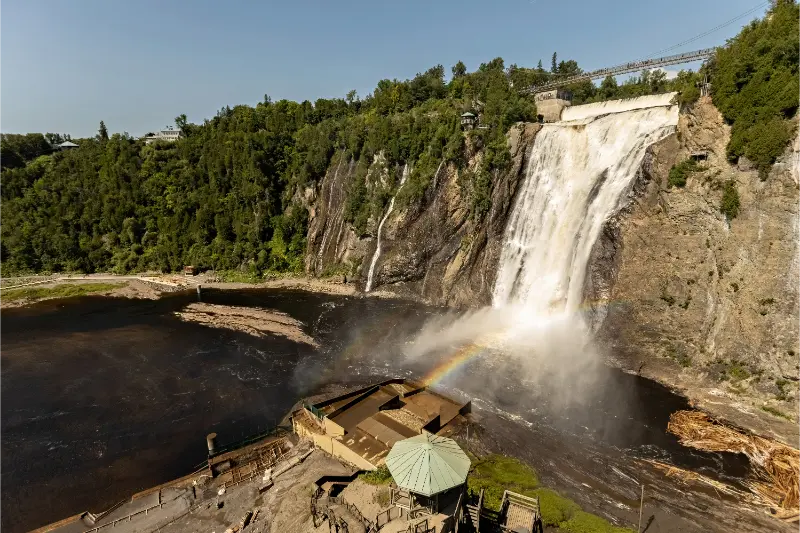
If the weather is clear, you can also make a half-day trip to Montmorency Falls or Île d’Orléans. For a ten-day route I would choose one, not both, unless you have your own car and are comfortable with a full day outside the centre.
Day 6: Québec City to Baie-Saint-Paul
Collect the rental car and follow the St. Lawrence east into Charlevoix. Baie-Saint-Paul is close enough that you do not need to leave at dawn. Stop for viewpoints and allow time to walk the town after arrival rather than treating it as a bed for the night.
This is where the trip changes pace. Cafés, galleries and local producers replace big-city attractions, and the surrounding hills invite short hikes or scenic drives. Our Charlevoix guide gives options for both active and food-focused days.
Day 7: Charlevoix
Spend a full day in the region. Depending on season, choose hiking in a national park, a scenic drive, local farms and producers, or a slower day between Baie-Saint-Paul and La Malbaie. Avoid trying to combine every village with a major hike.
If hiking is the priority, start early and check trail access. If food and scenery matter more, keep the schedule loose enough for farm shops and viewpoints that are easy to miss when following a rigid list.
Day 8: Charlevoix to Tadoussac
Continue toward Tadoussac. The route is scenic, but allow more time than the raw distance suggests. Arrive early enough to walk the village, visit viewpoints and confirm your whale-watching departure if you have booked one for the next morning.
Tadoussac is small and fills quickly in summer. Staying overnight changes the experience because the village becomes much calmer outside day-trip hours. See our Tadoussac whale-watching guide before choosing boat type and timing.
Day 9: whales and the Saguenay
Use the morning for whale watching or shore-based observation, then decide whether to stay around Tadoussac or drive into the Saguenay Fjord region. A second Tadoussac night is simplest; an overnight nearer Baie-Éternité makes sense if hiking the fjord is a major goal.
The fjord deserves more time than a quick photo stop. If you choose the hiking version, our Saguenay Fjord guide explains the different sectors and why their driving distances matter.
Day 10: return or extend
Return toward Québec City for a flight or continue to Montréal if your departure is there. Do not schedule a tight international flight after a long same-day drive from Tadoussac. An airport hotel or final city night can make the last day much safer.
If you have two or three extra days, add Saguenay–Lac-Saint-Jean rather than another distant region. If you have a full additional week, consider Gaspésie as a separate extension rather than forcing it into this route.
Where to stay
Use three bases for most of the trip: central Montréal, central Québec City and one or two stops in Charlevoix/Tadoussac. This limits packing and keeps the journey from becoming a nightly relocation exercise.
In Baie-Saint-Paul and Tadoussac, reserve earlier than you would in a large city. Smaller inventory means the best-located rooms disappear first on peak summer and fall weekends.
For current availability, compare hotels along the Québec route. I prefer to choose the location first and the hotel second; saving a little on a room is rarely worth adding a long drive or awkward transfer every morning.
Best time to go
June through September gives the most predictable mix of open services, long daylight and outdoor options. September is particularly attractive for whale watching and the beginning of fall colour, but accommodation can still be busy.
October can be excellent for foliage, but seasonal operations become less consistent. Winter requires a redesigned route with more emphasis on cities and snow activities rather than a direct copy of the summer itinerary.
A simple itinerary that works
The core rhythm is three Montréal nights, two Québec City nights, two Charlevoix nights and two Tadoussac/Saguenay nights. That is deliberately slower than a checklist route and leaves room for weather.
If you prefer cities, move one Charlevoix night to Québec City. If nature is the goal, move one Montréal night to the fjord.
Common mistakes to avoid
Do not collect the car on arrival in Montréal unless you truly need it. City parking adds cost and stress. Also avoid driving all the way from Montréal to Tadoussac in one day just to save a hotel change; you miss the logic of the route.
The other mistake is booking a whale cruise and a long onward drive with no buffer. Wind and marine conditions can affect departures, so leave flexibility around your most weather-dependent activity.
Useful official resources
Schedules, trail conditions and seasonal operating dates can change, so I would re-check the official sources shortly before travelling. Useful starting points are Bonjour Québec · Québec maritime whale information.
How this fits into a longer Canada trip
Québec rewards a slower pace. Instead of treating each place as an isolated stop, build the trip around contrasts: a few days in a city, a smaller town or food region, and then a landscape where the river, mountains or forest becomes the main reason to travel. That rhythm also makes driving days easier and gives you room for weather changes.
If this is your first journey in the country, pair the Québec planning here with our Canada travel guide for first-time visitors and best time to visit Canada guide. For a broader route, the two-week Canada itinerary ideas help you decide how much of eastern Canada is realistic in one trip.
Practical planning notes before you book
Build the schedule around geography rather than the number of attractions you have saved. In Québec, two places that look close on a map may involve slower regional roads, ferry timing, parking or a long detour around a river or fjord. I normally check the final drive time for every transfer before booking accommodation, then add a buffer for meals, viewpoints and roadworks. In cities, the opposite is true: a well-located hotel can remove the need for a car and make the day feel much more relaxed.
For summer and fall-colour weekends, reserve the hardest-to-replace element first. That may be accommodation in a small town, a popular national-park campsite, a whale-watching departure or a specific car category. Restaurants and minor attractions are usually easier to adjust. If your dates are flexible, moving a stay from Friday–Saturday to Sunday–Monday can sometimes make both prices and availability more comfortable.
Weather deserves respect even on a city-focused trip. Québec can move from warm afternoons to cool evenings quickly, while coastal and fjord areas often feel colder and windier than Montréal. Pack layers, a light waterproof shell and footwear that can handle wet paths. In winter, footwear with grip and genuinely warm outerwear matter more than fashionable city shoes.
Language is part of the experience rather than a barrier. French is the public language of Québec and is what you will see first on signs, menus and official information. In major visitor areas you can often find service in English, but a few basic French phrases are useful and appreciated. I also recommend downloading offline maps for road trips, because mobile coverage can be inconsistent in more remote landscapes.
Finally, keep your route editable. If fog hides a viewpoint, rain arrives on a hiking day or a ferry changes your timing, switch the order instead of forcing the original plan. A flexible itinerary is not less organized; it is usually the best way to travel well in a province where the landscape and seasons are a major part of the experience.
More Québec travel ideas
Québec travel guide · Charlevoix · Tadoussac · Saguenay Fjord
Final thoughts
The strongest trips are rarely the ones with the longest attraction list. Leave space for a market, an unplanned viewpoint, a bakery stop, a lakeside walk or an extra hour in a neighbourhood that feels right. Québec is particularly good at rewarding that kind of travel because food, scenery and local character are often found between the headline sights.
Disclosure: some links in this article may be affiliate links. If you make a booking through them, Dreaming of Canada may earn a commission at no extra cost to you.