
Canada is one of those destinations that can look simple on a map and become surprisingly complex as soon as you start planning. The country is enormous, climates vary dramatically, distances between famous places are often measured in hours of flying rather than short drives, and the experience changes completely depending on whether you choose Toronto and Québec, Vancouver and the Pacific coast, or the Rocky Mountains of Alberta.
That scale is also what makes a trip here so rewarding. You can build a holiday around big cities and food, wildlife and national parks, scenic road trips, skiing, lakes, fall colours, family attractions or a mix of all of them. The most important lesson for a first visit is simple: do not try to see all of Canada in one trip. Choose a region, leave room for slow days, and plan around the season rather than forcing a checklist.
Before you book: decide what kind of Canada you want
For many first-time travellers, Canada falls into three broad trip styles. Eastern Canada is excellent if you want cities, history, food and relatively easy rail connections. A classic route can include Toronto, Niagara Falls, Montréal and Québec City, with Ottawa added if you have time. Western Canada works well for travellers who want Vancouver, ocean scenery, forests and the Canadian Rockies. A nature-first trip can focus almost entirely on Banff, Lake Louise, the Icefields Parkway and Jasper.

If you are undecided, start with our two-week Canada itinerary ideas. The article gives three realistic routes rather than one impossible coast-to-coast plan.
Entry requirements: passport, visa or eTA
Entry rules depend on your nationality and on how you arrive. Many visa-exempt foreign nationals flying to or transiting through a Canadian airport need an Electronic Travel Authorization, known as an eTA. The official Government of Canada application fee is currently CAD 7. Travellers should use only the official government website because third-party sites can charge much more for the same application.
Rules differ for travellers who need a visitor visa, permanent residents, dual citizens and people entering by land or sea. Always check your own situation on the official Government of Canada visitor page before paying for flights. An eTA is electronically linked to the passport used for the application, so a new passport can mean a new eTA is required.
How much time do you need for Canada?
A long weekend can work for a single city such as Toronto, Montréal, Québec City or Vancouver. Seven days is enough for one city plus a nearby excursion, or for a compact road trip. Ten days gives you much more freedom. Two weeks is a strong first-trip length because it lets you combine experiences without racing every day.
| Trip length | Realistic scope |
|---|---|
| 3–4 days | One city or one compact destination |
| 7 days | One region, or city + nearby nature/day trip |
| 10 days | Two connected cities or a focused road trip |
| 14 days | Eastern city route, western city + Rockies, or two regions with a flight |
| 3 weeks | More relaxed multi-region trip with buffer days |
Best time to visit Canada
There is no single best month for the whole country. Summer offers the easiest access to hiking trails, lakes and mountain roads, but it is also the busiest and often the most expensive season in popular destinations. Autumn is excellent for cooler city breaks and fall colours in parts of Ontario and Québec. Winter is the right choice for skiing, snow and winter festivals, while spring can offer better prices in cities but unpredictable conditions in mountain regions.
Our detailed guide to the best time to visit Canada compares seasons, weather, crowds and the kind of trip each period suits best.
Understanding Canadian distances
One of the most common first-trip mistakes is assuming that major destinations are close because they are in the same country. Toronto to Montréal is a manageable intercity journey; Vancouver to Toronto is not. The latter is a cross-country trip covering thousands of kilometres.
In the Toronto–Montréal–Québec City corridor, trains can be practical. VIA Rail lists Toronto to Montréal at roughly five hours on many services, although schedules change. In the west, a car can be extremely useful for the Rockies, while Vancouver itself is easy to explore without one. Read our Canada transport guide before deciding whether to rent a car for the entire holiday.
Flights: international gateways and domestic connections
The airports most first-time international visitors use include Toronto Pearson, Vancouver International, Montréal-Trudeau and Calgary International. Your best gateway depends on the trip.
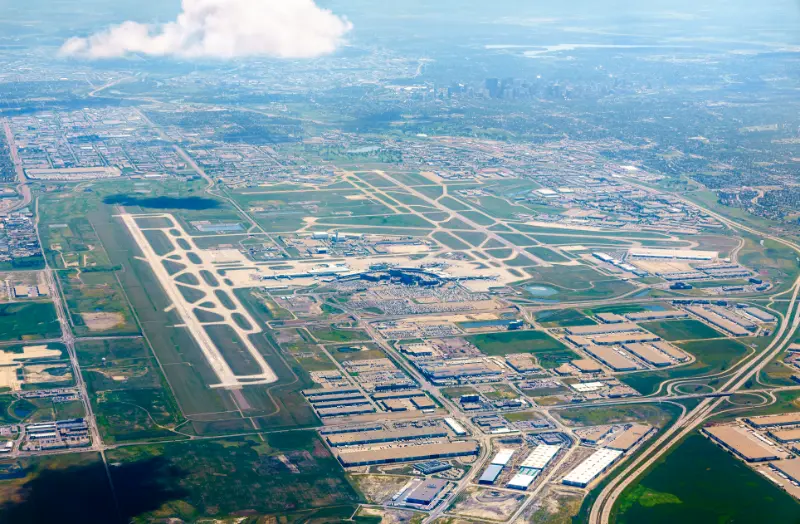
Calgary is often the practical choice for Banff; Vancouver is ideal for British Columbia and a west-coast start; Toronto and Montréal work well for eastern Canada.
Domestic flights can save several days when combining distant regions. If your dream itinerary includes Toronto and Vancouver in a two-week trip, flying is usually more sensible than trying to cover the distance overland unless the long rail journey is itself one of your main experiences.
Train, car or public transport?
There is no universal answer. A train is convenient between major cities in the Québec City–Windsor corridor. A rental car is valuable in rural areas and many national parks. Public transport is usually the easiest way to move around Toronto, Montréal and Vancouver. In Banff and Lake Louise, transit and shuttle systems can be more useful than visitors expect, especially around high-demand areas.
If you plan to drive, remember that Canada is not just large; conditions can change quickly. Mountain weather, snow, ice, wildlife and long distances between fuel stops matter. Never plan a remote road trip using city-driving assumptions.
Where to stay: location matters more than saving a little
For a short city stay, paying slightly more for a central neighbourhood can save hours of transport. In Toronto, downtown, the Entertainment District, Yorkville and areas near good subway connections are common choices. In Montréal, Downtown, Old Montréal and Plateau/Mile End suit different travel styles. In Québec City, staying in or close to Old Québec makes a short visit much easier. In Vancouver, Downtown, Yaletown, the West End and areas close to rapid transit are practical.
For national parks, book earlier than you would for an ordinary city trip. Banff, Lake Louise and Jasper can fill quickly in peak periods. You can compare current accommodation options on Booking.com for Canada and then narrow your search by neighbourhood or park gateway.
How much does a trip to Canada cost?
Canada can be done at several budget levels, but it is rarely a very cheap destination in the most popular cities and national parks. Your largest costs are usually accommodation, long-distance transport and car rental. Food can range from supermarket picnics and food courts to expensive restaurants, while many of the country’s best experiences—walking waterfronts, urban parks, mountain viewpoints and neighbourhoods—can cost little or nothing.
When budgeting, remember that displayed prices may not always include every tax or fee. Restaurant tipping is also part of the local culture. Build a buffer rather than calculating your trip to the last dollar.
Money, cards and cash
The currency is the Canadian dollar (CAD). Credit and debit cards are widely accepted in cities and tourist areas. Carrying a modest amount of cash can still be useful for small purchases, rural stops or situations where a card terminal is unavailable. Before departure, check your bank’s foreign transaction fees and ATM charges.
Mobile data, Wi-Fi and electricity
Canada uses Type A and Type B electrical plugs and a 120V supply. Travellers from Europe and many other regions usually need a plug adapter, and some devices may also need a voltage converter if they are not dual-voltage. Most modern phone and laptop chargers accept a wide voltage range, but check the label.
Mobile data can be expensive compared with some countries, so compare roaming, local SIM and eSIM options. Download offline maps before driving in remote areas. In the Rockies and rural Canada, do not assume you will have continuous mobile coverage.
Health, travel insurance and outdoor safety
Travel insurance is worth considering seriously, especially for hiking, skiing, road trips or a holiday involving expensive prepaid bookings. Medical care for visitors can be costly. If you will hike or drive in remote areas, share your route, check weather and closure notices, carry water and basic emergency supplies, and understand local wildlife guidance.
In mountain parks, wildlife should never be approached for photographs. Keep a safe distance, follow Parks Canada instructions and store food correctly. Weather can change even on a day that begins warm and sunny.
National parks: passes, reservations and planning ahead
Canada’s national parks are a highlight, but the most famous locations need planning. In Banff National Park, admission fees and temporary discounts can change. For current prices, passes and reservation policies, consult the official Banff park-pass page.
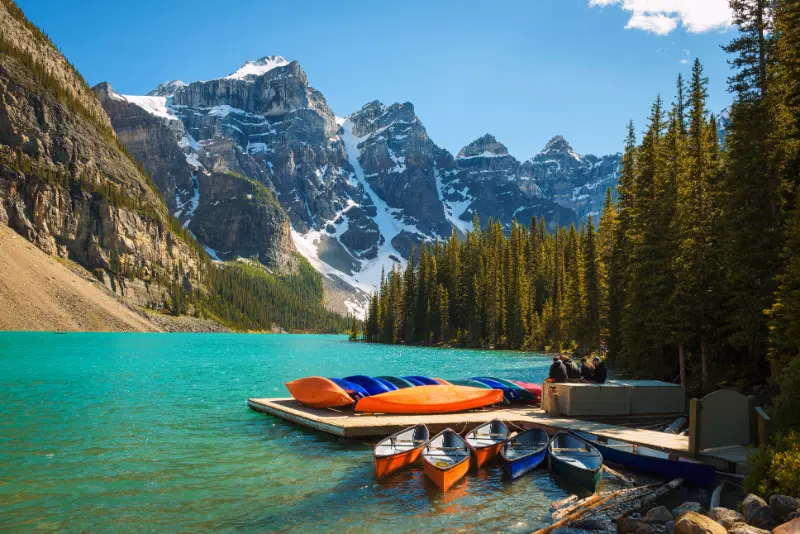
Moraine Lake is an especially important example: personal vehicles are not permitted on Moraine Lake Road. Visitors use shuttles, transit or licensed commercial transportation. If the Canadian Rockies are part of your dream trip, read our Banff and Jasper road-trip guide before booking hotels.
What to pack
Layers are more useful than one heavy outfit. Even in summer, evenings can be cool in mountain regions. A waterproof outer layer, comfortable walking shoes, sun protection and a reusable water bottle belong in most Canada packing lists. For winter, clothing should be chosen for the actual destination and temperature, not for a generic idea of “cold Canada.” Montréal in January and Vancouver in January can feel very different.
Language: English, French and everyday travel
English is widely used across most of the country, while French is the official language of Québec and is central to everyday life there. Montréal is highly bilingual in many tourism contexts, but using a few French greetings is respectful and useful. Canada is officially bilingual at the federal level, but the language experience varies by province and community.
Where I would start on a first trip
If your priority is an easy first introduction, the eastern route from Toronto to Niagara Falls, Montréal and Québec City is hard to beat because it combines major cities with a famous natural attraction and does not require a car for every stage. Start with our Toronto travel guide, continue to the Niagara Falls guide, then move east to Montréal and Québec City.
If nature is the main reason you are travelling, consider Vancouver plus the Rockies. Spend a few days with our Vancouver guide, then fly or drive toward Calgary/Banff depending on your itinerary.
Final advice for planning Canada well
The most memorable Canada trips are rarely the ones with the longest list of places. They are the ones that respect distance, weather and the pace of the destination. Leave a little room for a lake you did not expect to stop at, a neighbourhood you want to explore longer, or a mountain day that needs to move because of weather.
Start with one region, choose a realistic number of bases, book the high-demand pieces early, and keep the rest flexible. Canada rewards travellers who give it time.
Disclosure: some links in this article may be affiliate links. If you make a booking through them, Dreaming of Canada may earn a commission at no extra cost to you.
More Ontario travel ideas
Ontario travel guide · 10-day Ontario road trip
Explore the Canadian Prairies
Manitoba travel guide · Saskatchewan travel guide
Explore Northern Canada
Yukon travel guide · Northwest Territories travel guide
Dreaming of the Canadian Arctic?
Nunavut travel guide · Baffin Island guide
Canada experiences and inspiration
Wildlife experiences · Best small towns
Food, culture and heritage in Canada
UNESCO sites in Canada · Best museums in Canada
3-day city itineraries
3 Days in Toronto · 3 Days in Vancouver · 3 Days in Montréal · 3 Days in Québec City · 3 Days in Ottawa · 3 Days in Calgary · 3 Days in Victoria · 3 Days in Halifax · 3 Days in Winnipeg
Neighbourhood guides: choose the right base
Vancouver · Québec City · Ottawa · Calgary · Victoria BC · Halifax · Winnipeg · Edmonton ·
Planning a summer trip?
Read our Canada in Summer: Weather, Crowds, Road Trips and a Smart First-Trip Plan.
Summer destination guides
Toronto · Vancouver · Montréal · Québec City · Banff · Jasper · Yukon
Planning a spring trip?
Read our Canada in Spring: Weather, Shoulder Season, Blossoms and a Smart Trip Plan.
Spring destination guides
Toronto · Vancouver · Montréal · Québec City · Ottawa · Victoria · Niagara Falls · Banff ·
Hidden gems in Canadian cities
Toronto · Vancouver · Montréal · Québec City · Ottawa · Calgary · Victoria BC · Halifax · Winnipeg · Edmonton
Airport transfer guides for Canadian cities
Calgary · Winnipeg
Where to stay in Canada’s major cities
Toronto · Ottawa · Calgary · Victoria BC · Halifax · Winnipeg ·