
Toronto in spring is a city in transition rather than a single postcard season. March can still feel cold, April alternates between rain and sudden warmth, and late April into early May can bring the cherry blossoms that turn High Park into one of the city’s busiest seasonal attractions. By late May, patios, cycling routes and the waterfront feel increasingly summer-like.
Destination Toronto notes that cherry blossoms typically peak between late April and early May, with only a short peak window. That is why I would never make one grove the entire trip. Build a four-day Toronto plan around neighbourhoods, museums, food and the lake, then treat blossoms as the seasonal highlight when timing cooperates.
Toronto in spring at a glance
- Ideal trip: 3 to 4 days
- Best for: cherry blossoms, neighbourhood walks, museums, food and waterfront days
- Car needed? no for the city; transit is usually easier
- Spring strength: short-lived blossoms plus long urban walking days before summer heat
- Watch for: rapid weather changes, lake wind and blossom timing
What spring really means in Toronto
Toronto’s spring advantage is range. You can spend a cold morning in a major museum, catch sun on the waterfront in the afternoon and finish in a neighbourhood where patios have just reopened. That mix makes March through May much easier to enjoy than visitors sometimes assume.
Cherry blossoms are spectacular but brief. Do not design the entire trip around a single forecast. High Park is famous, yet Trinity Bellwoods, Centennial Park, Toronto Island Park and several university or neighbourhood spaces can offer spring colour too. The better trip is one where blossoms are a bonus inside a broader city plan.
The lake remains cold well after the air begins to warm. Waterfront wind can make a sunny day feel several degrees cooler than the forecast suggests, so a light insulating layer is useful even when downtown sidewalks look fully springlike.

Month by month
March
Choose March for museums, markets, sports and lower-pressure city sightseeing. Snow or cold rain is still possible, and Toronto Island is not yet the relaxed summer experience many visitors picture.
April
April is unpredictable but rewarding. The city becomes greener, patios reopen in bursts and blossom watchers begin following High Park conditions. Waterproof shoes and a flexible daily order matter.
May
May is the easiest spring month for outdoor Toronto. Parks fill out, cycling becomes more pleasant and long days support neighbourhood exploration. Tulips and late spring flowers can continue after cherry blossom peak has passed.
The experiences I would build the trip around
See cherry blossoms without making High Park your only plan
High Park is the famous location, but the crowds can be intense at peak bloom. Destination Toronto highlights other blossom locations including Trinity Bellwoods and parks around the city. Go early, use transit and keep an alternative location ready.
Walk west Toronto after the blossoms
Roncesvalles, Bloor West Village and the Junction are natural additions to a High Park morning. This turns a short flower stop into a neighbourhood day with bakeries, cafés and local streets rather than a commute for photographs only.
Use the waterfront when the wind cooperates
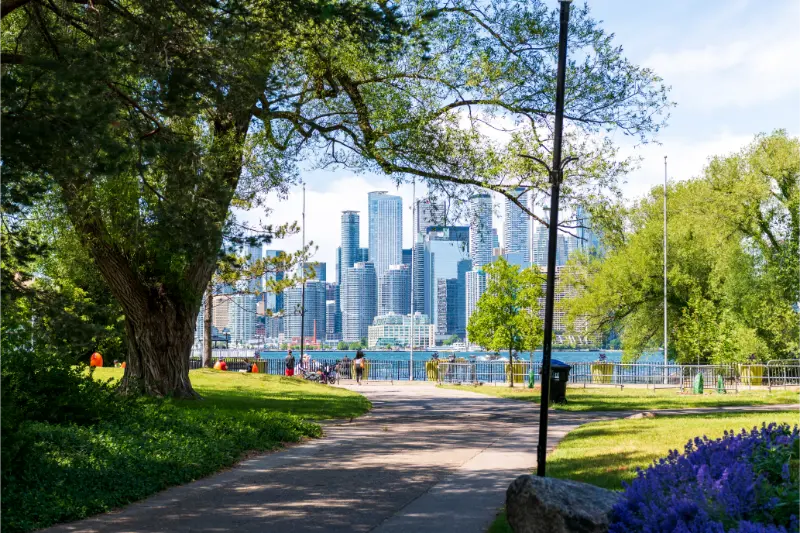
The Martin Goodman Trail gives you a long, flat way to understand Toronto’s relationship with Lake Ontario. Walk a section rather than treating the full route as an attraction you need to complete.
Keep one serious museum for a wet day
The Royal Ontario Museum, Art Gallery of Ontario and other indoor attractions are valuable spring insurance. Place one on the itinerary but decide the exact day only after checking the forecast.
Explore markets and food neighbourhoods
St. Lawrence Market, Kensington Market, Chinatown and Ossington give the trip depth when outdoor weather is mixed. Spring is particularly good for building a day around food because you can move indoors and outdoors without losing momentum.
Consider Toronto Islands later in spring
Island ferries and waterfront time become more appealing as temperatures rise, but the lake can remain cold and breezy. In early spring I would prioritize the city; in late May, an island half-day becomes much more attractive.
The important point is not to collect all of these experiences. For a 3 to 4 days trip, choose the ones that fit your exact week and leave enough unscheduled time to react to weather. Spring rewards travellers who can change the order of a day without feeling that the itinerary has failed.
A realistic 3 to 4 days spring itinerary
Day 1
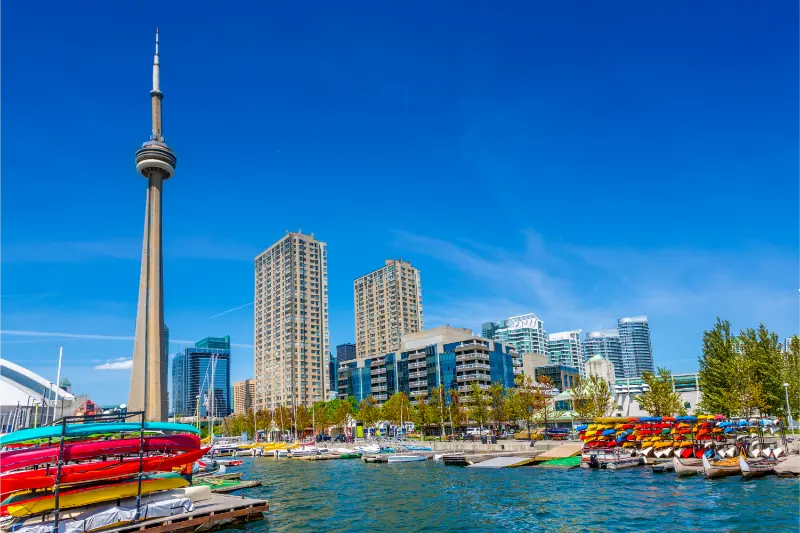
Downtown, St. Lawrence Market, harbourfront and an evening in the Distillery District or Old Town.
Day 2
High Park or another blossom location, then Roncesvalles, the Junction or west-end food stops.
Day 3
Museum morning, Queen West, Kensington Market and Chinatown, adjusting the indoor hours to rain.
Day 4
Toronto Islands or waterfront cycling in warmer weather; otherwise neighbourhoods and a second cultural stop.
Getting around in spring
Toronto is easiest when transport matches the scale of the trip. Do not rent a car automatically just because Canada is large. Central sightseeing in many cities is faster by walking and public transport, while a vehicle becomes valuable for regional nature, countryside or mountain extensions.
Spring adds one extra consideration: seasonal schedules. Ferries, shuttles, mountain lifts, park roads and tour services can change between winter and summer timetables. Check the operator’s current page rather than relying on a timetable copied into an old blog post.
Where to stay
For a short spring trip, I value location more than a slightly cheaper room. A well-located base lets you return for a dry jacket, change the plan when rain arrives and walk to dinner without turning every day into a transport exercise.
Compare Toronto accommodation and look closely at recent reviews for heating, ventilation, parking if relevant, and walking distance to the transport you will actually use. In shoulder season, flexible cancellation can be worth more than the absolute lowest prepaid rate.
What to book early and what to leave flexible
Reserve the pieces with real capacity limits: a special hotel, a popular festival weekend, a timed attraction, a ski lesson, a whale-watching trip or a destination restaurant that matters to you. Keep parks, neighbourhood walks and most outdoor viewpoints flexible so you can move them to the clearest part of the forecast.
When an experience depends on flowers, wildlife, snow or open water, treat the timing as a range rather than a guarantee. Natural seasons do not follow marketing calendars exactly.
Official resources worth checking before you go
I use official sources for current closures, operating dates and seasonal conditions, then use travel guides for route ideas and context. That order matters most in spring because conditions can change quickly.
What to pack for Toronto in spring
Pack layers rather than one heavy outfit: a breathable base, warm mid-layer and light waterproof shell cover most city situations. Comfortable water-resistant shoes are more important than they seem because thaw, rain and puddles can make long walking days unpleasant.
Add sunglasses and sunscreen even when temperatures are cool. For mountain or marine activities, bring the clothing recommended by the operator or park rather than assuming urban spring gear is enough. A warm hat and thin gloves still earn their place on many March and April trips.
Visiting Toronto with children
Spring can be excellent for families because popular places are often less intense than midsummer, but children feel cold, wet weather faster than adults. I plan one indoor anchor each day and avoid making a flower forecast or long exposed walk the only reason the day works.
Keep spare socks or a small dry layer in the day bag. If the trip includes a boat, mountain gondola or high-elevation stop, assume the temperature will feel colder than in the city centre.
How to keep a spring trip good value
Shoulder season can reduce accommodation costs, but value comes from fewer transport mistakes more than from chasing the cheapest room. Stay closer to the area you want to explore, use public transit where practical and avoid paying for a rental car that spends most of the trip in a garage.
Free parks, neighbourhood walks and waterfront routes are excellent spring activities. Spend your budget on the experience that genuinely changes access—such as a wildlife tour, special museum, gondola or regional excursion—rather than filling every hour with tickets.
Common spring mistakes to avoid
- Assuming March, April and May feel like the same season.
- Planning around one exact bloom date months in advance.
- Using a city forecast to judge mountain or marine conditions.
- Booking every outdoor activity on consecutive days with no weather flexibility.
- Packing shoes for style rather than wet streets and long walks.
- Assuming summer transport schedules and attraction hours are already active.
- Trying to compensate for lower crowds by adding too many stops.
Related Dreaming of Canada guides
- Toronto Travel Guide
- Best Time to Visit Toronto
- Toronto in Summer
- Toronto in Winter
- Toronto Neighbourhoods Guide
Frequently asked questions
When do Toronto cherry blossoms bloom?
They typically peak between late April and early May, but weather shifts the exact dates and peak can last only about a week.
Is High Park worth it during peak bloom?
Yes if you arrive early and accept crowds. If you prefer a quieter experience, use one of the city’s other blossom locations.
Do I need a car?
No. TTC, walking and occasional ride-hailing are generally easier than downtown parking.
Is May warm?
It is often pleasant, but lake wind and cool evenings remain possible. Pack layers rather than relying on one daytime forecast.
My spring planning rule for Toronto
I separate the trip into three layers. The first layer is weather-proof: the hotel area, food neighbourhoods and one or two indoor attractions. The second is weather-sensitive but easy to move, such as parks, gardens and waterfront walks. The third is the fragile experience—blossoms, wildlife, skiing or a mountain excursion—that depends on nature or operations. I never let the fragile layer control every day of the holiday.
This approach also makes spring less stressful. If a forecast changes, you are not cancelling the trip; you are simply moving one layer. That is the difference between a rigid itinerary and a resilient one.
Final thoughts
Toronto in spring is at its best when you travel for the transition itself. Expect change, verify seasonal details close to departure and let the week you actually get determine the order of the trip. You will see a destination waking up rather than performing its peak-season routine.
Disclosure: some links in this article may be affiliate links. If you make a booking through them, Dreaming of Canada may earn a commission at no extra cost to you.