
Toronto in fall is a city trip with two different personalities. September often feels like an extension of summer, while October brings cooler air, stronger colour and a more local rhythm after the busiest holiday period. By November, the trip becomes increasingly urban: museums, food, live events and neighbourhoods matter more than chasing foliage.
Destination Toronto notes that fall temperatures trend from average highs around 20°C in September to about 13°C in October and 7°C in November, while peak foliage in the city often arrives in mid-to-late October. Those are useful averages, not a promise. I would plan the trip around what Toronto does well in any weather, then use the best outdoor hours for parks and ravines.
Toronto in fall: quick planning overview
| Ideal stay | 3 to 4 days |
|---|---|
| Best for | urban fall colours, neighbourhood walks, museums, food, sports and easy day trips |
| Car | not needed for the city; useful only for selected countryside day trips |
| Main caution | shorter daylight, rapidly cooling evenings and busy weekends during major events |
September, October or November?
Fall is a transition, not a single set of conditions. The same itinerary can feel completely different three weeks later, so choose the month for the experience you want rather than assuming that every autumn date delivers peak colour.
September
Often mild enough for long waterfront walks, patios and the Toronto Islands. Cultural and sports calendars are busy, so accommodation can still be expensive on event weekends.
October
The strongest all-round autumn month for colour, crisp walking weather and neighbourhood exploration. Mid-to-late October is often the best foliage window in the city, but weather controls the exact timing.
November
Quieter and colder. Focus on museums, markets, food, indoor culture and shorter outdoor walks; early snow or frost is possible.
Best things to do in Toronto in fall
Walk the ravines instead of only downtown
Toronto’s ravine network is one of the city’s most distinctive landscapes. Evergreen Brick Works and nearby Don Valley routes let you see maples and other deciduous trees without leaving the urban core. Stay on marked paths and expect muddy sections after rain.
Use High Park for colour, not just cherry blossoms
High Park is famous in spring, but its wooded slopes, ponds and open spaces are equally useful in autumn. Combine the park with Roncesvalles or the waterfront rather than travelling across the city for a single photo stop.
Take a Toronto Islands half-day while ferries still fit your dates
The islands give you skyline views, open space and a completely different sense of scale. Services thin outside summer, so check the current ferry timetable and restaurant openings rather than assuming July-level operations.
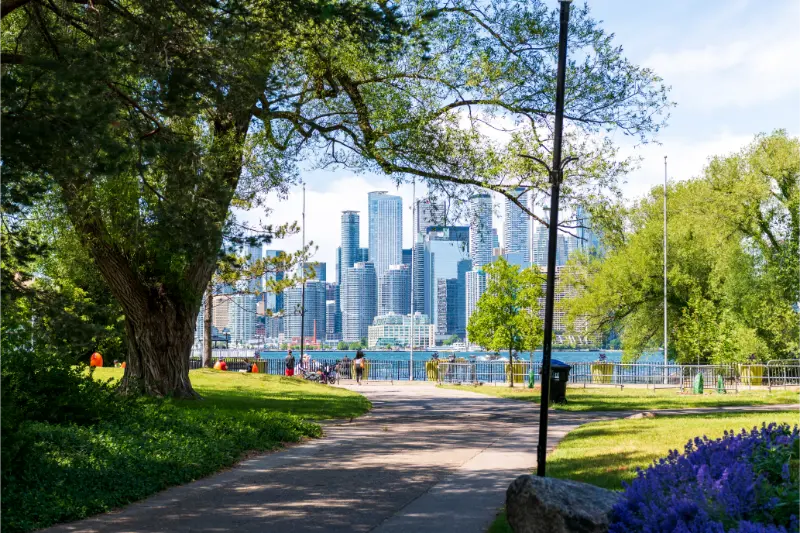
Build a neighbourhood day around Kensington, Chinatown and Queen West
Fall suits slow city exploration. Markets, independent shops, cafés, street art and small restaurants give you frequent indoor breaks without abandoning the walkable character of the day.
Pair culture with weather rather than fighting rain
The Royal Ontario Museum, Art Gallery of Ontario and other major institutions are not backup plans; they can be anchors. Put them in the wettest or coldest part of the forecast and keep clear hours for parks.
See the city from the water or waterfront
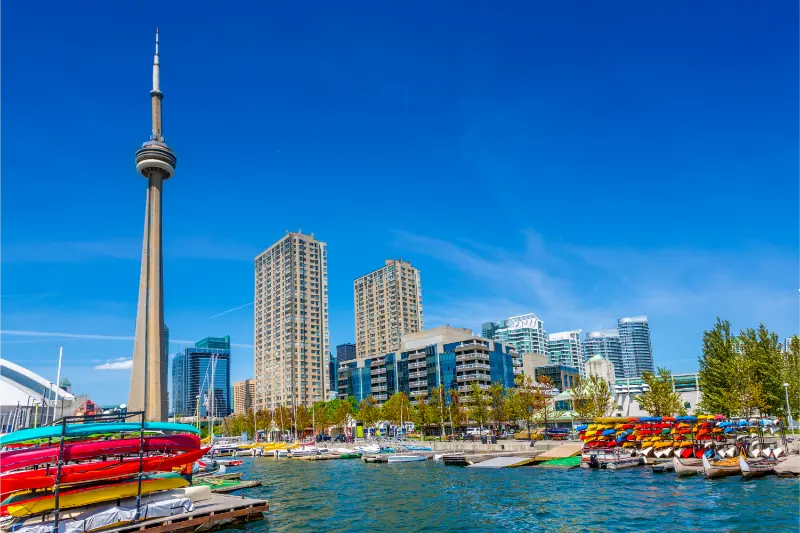
Harbourfront remains enjoyable after summer crowds ease. Wind off Lake Ontario can make the temperature feel lower than the forecast, so carry an extra layer even on bright days.
Consider one fall-colour day trip
If the city trees are not at their best, Ontario’s colour progression may be stronger farther north or at a different elevation. Use the Ontario Parks fall-colour report before choosing a nature day rather than booking solely from a calendar date.
A realistic 3 to 4 days itinerary
I would keep the itinerary deliberately flexible. Put the most weather-dependent outdoor activity on the best forecast day and move museums, markets, food and neighbourhood time around it.
Day 1
Downtown landmarks, Harbourfront and an evening in the Entertainment District or King West.
Day 2
High Park, Roncesvalles, Queen West and Kensington Market.
Day 3
Evergreen Brick Works and ravine walking, then a museum or neighbourhood dinner.
Day 4
Toronto Islands in suitable weather or a flexible fall-colour day trip outside the city.
Where to stay in Toronto
For a short fall trip, location is usually worth more than saving a small amount on a room far away. A central base reduces driving after dark, makes wet-weather changes easier and lets you use early morning or late-afternoon light without turning each outing into a commute.
Autumn is shoulder season in some places but peak season in others. Foliage weekends, festivals and mountain access can create very high demand even after summer holidays end. Compare current availability on Booking.com and prioritize a property with a cancellation policy that matches your weather-sensitive plans.

Getting around
Not needed for the city; useful only for selected countryside day trips. If you do rent a car, remember that sunset comes much earlier as fall advances. Rural roads, wildlife and wet leaves can all make night driving less comfortable than it looked on the map. In cities, public transit often saves time and parking stress.
For transfers between major Canadian cities, reserve trains or flights when your dates are fixed. For remote regions, build in fuel stops and avoid assuming that every summer seasonal service remains open in October.
Fall weather and what I would pack
My basic autumn system is a light base layer, warm mid-layer and waterproof outer shell, plus comfortable shoes with useful grip. Add gloves and a warm hat for mountain, coastal or late-October trips. This is more practical than one bulky coat because temperatures can swing sharply between midday sun and early morning.
Keep a small dry bag or waterproof pouch for phone, camera and documents. If hiking, carry water, food, navigation and the safety equipment appropriate to the area. Mountain and wilderness conditions should always be checked locally before departure.
How to plan around fall colours without ruining the trip
Foliage forecasts are useful, but they are not reservations. Temperature, wind, rain, latitude and elevation all affect timing. I would never book a whole holiday around a claim that one exact Tuesday will be peak colour. Instead, choose a region with several good landscapes and give yourself at least two outdoor windows.
If an official colour report exists, check it a few days before arrival. Photographing after rain can produce saturated colours, while overcast light can be excellent in forest. A blue-sky afternoon is not the only version worth seeing.
Crowds, reservations and the shoulder-season trap
One of the biggest mistakes is assuming that “fall” automatically means low season. Famous foliage destinations can be busier on an October weekend than on an ordinary summer weekday. Book the hard-to-replace item first: a park permit, shuttle seat, festival accommodation or trail parking reservation.
At the same time, later autumn brings the opposite risk: reduced hours. Reconfirm restaurants, visitor centres, tours, ferries, lifts and attractions shortly before travel. A business that is open every day in August may operate only on weekends in late October.
Food and the slower rhythm of fall
Autumn is a good season to leave more room for meals. Markets, orchards, bakeries and seasonal menus can tell you as much about a region as another viewpoint. Instead of reserving every lunch, I like to keep one meal spontaneous and one evening meal planned, especially in smaller destinations where kitchens may close earlier.
Canadian Thanksgiving falls in October and can affect demand and opening hours. If your trip overlaps the long weekend, check reservations and transport rather than assuming a normal Monday schedule.
Common mistakes I would avoid
Do not chase colour across huge distances because a social post says another region is “better.” Canada is enormous, and losing six hours to driving usually costs more than gaining a slightly stronger shade of red. Avoid late trail starts as daylight shrinks, do not trespass or stop illegally for photos, and never approach wildlife.
Another mistake is using summer packing and summer operating hours for an October itinerary. Autumn needs more flexibility, warmer clothing and more frequent checks of official sources.
Useful official resources
Seasonal conditions change quickly, so I would save these official pages and check them again shortly before travelling:
Related Dreaming of Canada guides
- Toronto Travel Guide
- Best Time to Visit Toronto
- 3 Days in Toronto
- Toronto Neighbourhoods Guide
- Toronto in Summer
Frequently asked questions about Toronto in fall
When are Toronto fall colours usually best?
Destination Toronto says peak foliage typically arrives in mid-to-late October, but timing changes with weather.
Is September cold?
Usually not. September often has mild days, although evenings beside Lake Ontario can feel cool.
Do I need a car?
No for a city-focused trip. Transit, walking and rideshare cover the main areas well.
Is November still worth visiting?
Yes for food, museums, sports and neighbourhood life, but it is less reliable for foliage.
Where should I stay?
Downtown is easiest for a first visit; West End neighbourhoods can be better if food and local atmosphere matter more than landmark proximity.
My final take on visiting Toronto in fall
The best autumn trip is built around conditions rather than a rigid checklist. Choose a strong base, reserve the limited-access experiences, keep at least one day flexible and let the actual weather decide when you spend your longest hours outside. That approach makes Toronto rewarding whether you arrive at absolute peak colour or a week either side of it.
Disclosure: some links in this article may be affiliate links. If you make a booking through them, Dreaming of Canada may earn a commission at no extra cost to you.